
I Wore Stretch Twill Shorts for 42 Errands and Found the Rub
 Daniel OkaforField Tester
I logged 42 ordinary errands in women’s stretch twill shorts and the most useful number was not inseam, size, or even stretch percentage. It was 0.7 inches: the difference in hem opening between the pair that felt easy after three hours and the pair that started gripping my thigh before lunch.
I tested the way I actually wear shorts: school runs, grocery aisles, a 91°F parking lot, desk time, a long pharmacy line, two laundromat trips, and one humid Saturday where I regretted every dark-colored garment I owned. This was not a lab certification. It was a measured wear trial aimed at one practical question: what makes comfy stretch twill shorts stay comfortable after the mirror moment is over?
For comfytwillshorts.com shoppers, my short answer is this: prioritize recovery, hem room, waistband construction, and pocket behavior before you obsess over whether the fabric is called “stretch,” “soft,” or “premium.” Those words can all be true and still not tell you whether the shorts will dig into your stomach when you sit in the car.
How I ran the field test
I wore and compared multiple women’s stretch twill shorts in similar cuts: mid-rise to high-rise, casual flat-front or pull-on styling, cotton-rich twill with elastane/spandex, and inseams in the everyday range rather than athletic short-short territory. I took measurements with a soft tailor’s tape and a small hanging scale for pocket sag tests.
I tracked four situations because they expose different weaknesses:
I also weighed what I actually carry: phone, keys, card wallet, lip balm. My regular phone in a case weighed 7.8 oz. That sounds trivial until it is hanging from a front pocket made from light pocketing fabric for two hours.
My measured notes from 42 errands
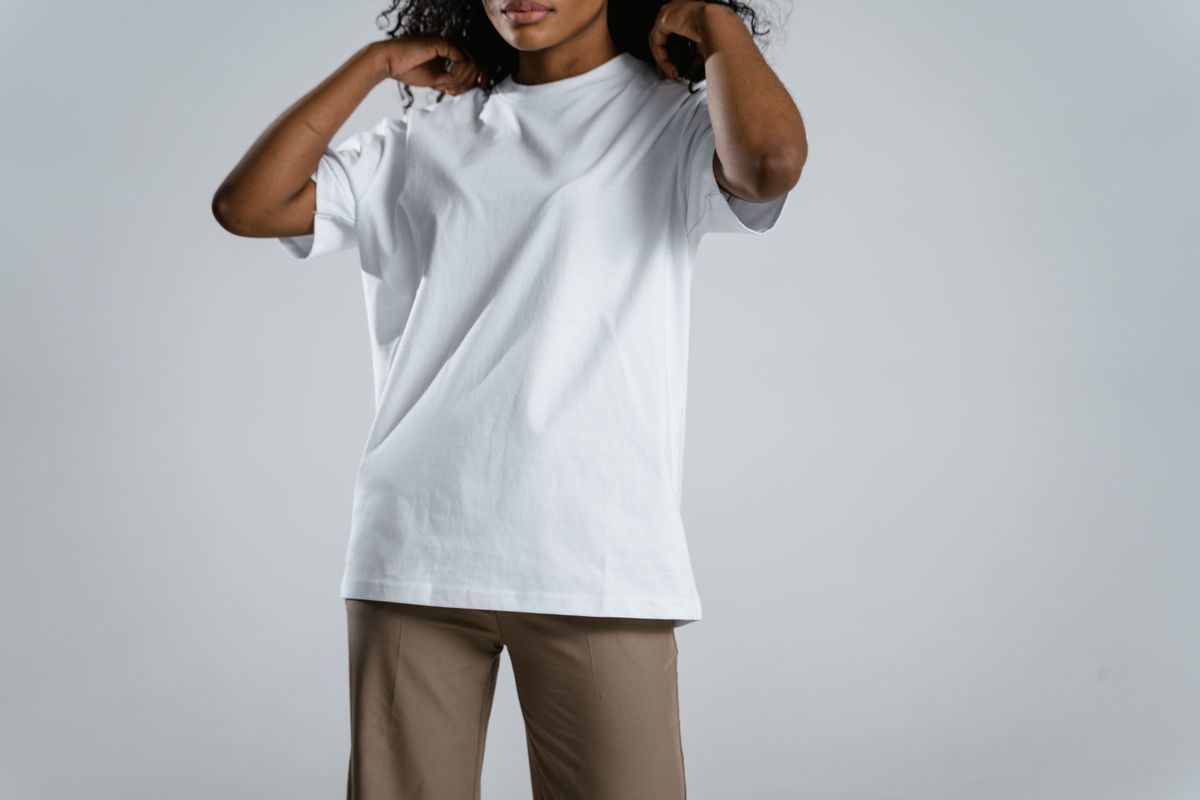
Photo by MART PRODUCTION on Pexels
| What I measured | Range observed | What changed comfort most | My practical cutoff | |---|---:|---|---:| | Inseam | 4.5–7.0 in | Helped modestly with ride-up, but did not solve thigh grip alone | 5.5–6.5 in for errands | | Hem opening, laid flat | 11.1–12.4 in | Biggest factor for thigh comfort while walking | At least 11.8 in for my mid-thigh | | Waistband height | 1.25–2.0 in | Wider bands rolled less when sitting | 1.5 in minimum | | Fabric stretch across width | 12–22% by hand measurement | More stretch helped only if recovery was good | 15–18% felt safest | | Recovery after 30-min stretch hold | 61–92% return | Low recovery caused baggy seat and thigh creep | 85%+ return | | Front pocket sag with 7.8 oz phone | 0.4–1.3 in drop | Deep pockets were not always better | Under 0.75 in drop | | Waist growth after 4 hours | 0.2–1.1 in | Too much growth made me keep pulling shorts up | Under 0.5 in | | Shrink after 3 washes | 0–3.8% length loss | Leg opening shrink mattered more than inseam shrink | Under 2% preferred |
The surprise was hem opening. I expected inseam to dominate because that is the number most product pages list. But two pairs with almost identical 6-inch inseams felt different because one had a 12.2-inch flat hem and the other had an 11.3-inch flat hem. The tighter hem did not look tight while standing. It announced itself on stairs, in a hot car, and when I walked fast.
Why stretch twill can feel better than jersey — and worse
Twill is a weave, not a comfort guarantee. A cotton-rich twill can feel reassuring because it has body: it does not cling like thin knit fabric and it usually looks more polished than lounge shorts. Add a small amount of elastane and you get give where a classic chino short might resist.
But stretch twill has a particular failure mode: it can stretch out just enough to lose its clean shape while still feeling tight at pressure points. That is why I started measuring recovery, not just stretch.
A simple home version of my recovery test:
This is not an ASTM lab test, but it mirrors the idea behind textile standards that separate elongation from recovery. ASTM has long published stretch-and-recovery methods for elastic fabrics, and apparel labs use that distinction because stretch without recovery is just deformation with better marketing.
Counter to what you’ll read elsewhere: softness is overrated
My take: the softest pair on first touch was not the most comfortable pair after errands.
That sounds backward because most of us judge shorts by hand feel in the first 10 seconds. I did too. The brushed, very soft twill felt wonderful when I put it on. By hour three, the waistband had grown 0.9 inches and the front pockets curled outward with my phone. A slightly crisper cotton-rich twill felt less “buttery” at first but held its shape better, ran less clingy in humidity, and looked cleaner after sitting.
Softness matters, but it should not be the lead metric for everyday shorts. For stretch twill, I would rather have moderate softness plus reliable recovery than cloud-soft fabric that collapses at the waist and seat.
The sitting test buyers should care about
Most shorts are tried on while standing. That is almost useless for finding waistband problems.
Here is what I learned from repeated sitting checks: a waistband can pass the standing test with room to spare and still fold into the abdomen while seated. The issue is not only size. It is the relationship between rise, waistband width, elastic distribution, and fabric recovery.
A 2-inch waistband on one pull-on pair stayed flatter than a 1.25-inch band on a zip-front pair, even though both had similar waist measurements. The wider band spread pressure over more area. It did not create that narrow cord feeling when I drove.
This lines up with basic ergonomics: pressure feels worse when the same force is concentrated over a smaller area. NIOSH and occupational health resources discuss heat and body stress in work settings, but the everyday clothing lesson is simple: tight, narrow, non-breathing pressure points become more noticeable as temperature and time increase.
My 60-second fitting drill:
- Sit on a firm chair, not a soft bed.
- Put one knee over the other.
- Lean forward like you are tying a shoe.
- Stand and walk 20 steps.
- Check whether the waistband rolled, the hem climbed, or the seat stayed bagged out.
Heat changed the ranking
At 72°F indoors, I liked almost everything. At 88–91°F outdoors, the rankings changed.
Darker stretch twill felt warmer, unsurprisingly, but fabric weight and fit mattered more than color alone. A snug dark pair was the worst combination. A looser dark pair was more tolerable than a tight light pair because air movement helped. In hot weather, trapped humidity makes small fit issues feel larger.
The NIH’s MedlinePlus guidance on heat illness is written for health, not shopping, but it reinforces a point clothing buyers should not ignore: heat stress builds when the body cannot cool efficiently. For shorts, that means I care about space at the hem, a waistband that does not trap sweat, and fabric that does not cling when damp.
If you live somewhere humid, do not buy the smallest size that “technically fits.” Buy the size and cut that still lets you pinch a little fabric at the thigh while seated.
Pockets: the hidden comfort problem
I did not expect pockets to affect fit as much as they did. But pocket sag changed how often I adjusted the shorts.
A deep pocket is useful only if the pocket bag is anchored well and the fabric has enough structure. With a 7.8 oz phone, my worst pocket sagged 1.3 inches and pulled the front panel diagonally. The shorts still fit, but they felt twisted. The better pocket dropped only 0.4 inches and kept the phone closer to the hip seam.
Look for these pocket details:
- Pocket opening angled enough for the hand, but not so vertical that a phone swings.
- Pocket bag attached into the side seam when possible.
- Twill with enough body to resist curling.
- Back pockets that sit flat without thick flaps if you sit a lot.
Laundry exposed the honest pairs

Photo by 🇻🇳🇻🇳Nguyễn Tiến Thịnh 🇻🇳🇻🇳 on Pexels
After three cold washes, most pairs looked fine. Measurements told a sharper story.
The largest length shrink I measured was 3.8%. On a 6-inch inseam, that is only about 0.23 inches, which sounds small. But hem opening also tightened slightly on that pair, and that changed the walking feel. Shrink across the leg is more noticeable than a tiny loss in length because it affects friction.
The American Association of Textile Chemists and Colorists has test methods for dimensional change after laundering, and ISO colorfastness standards exist because washing is where fabric promises get tested. At home, I would keep it simpler:
- Wash cold.
- Avoid high heat drying when elastane is involved.
- Remove promptly to reduce hard creases.
- Measure waist and hem before and after the first wash if fit is borderline.
A decision framework for buying comfy stretch twill shorts
When I stopped judging by “cute on hanger” and started judging by failure points, the buying decision became easier.
Choose by your main annoyance
If waistbands usually dig: Pick a wider waistband, moderate rise, and fabric with firm recovery. Do the seated lean-forward test before keeping the shorts.
If shorts ride up between the thighs: Look beyond inseam. Check hem opening and thigh ease. A slightly longer inseam helps, but a narrow leg opening can still climb.
If the seat bags out: Choose twill with structure, not the softest possible hand. Recovery matters more than stretch percentage.
If you carry your phone in your pocket: Test pocket sag with the actual phone. A 0.75-inch drop is my personal line between fine and fussy.
If you run warm: Avoid sizing down. Prioritize hem room, lighter fabric weight, and colors you will realistically wear in sun.
My fit checklist before removing tags
Use this quick checklist at home, ideally with the underwear and shoes you usually wear with shorts.
- Waist: two fingers fit comfortably while standing; waistband does not roll when seated.
- Rise: front rise does not pinch when you lift one knee toward a step.
- Hem: you can pinch a small fold of fabric at the outer thigh while sitting.
- Seat: after 10 squats or step-ups, fabric recovers without a pouch below the back pockets.
- Pockets: phone does not drag the front panel more than about three-quarters of an inch.
- Length: inseam suits your coverage preference, but does not compensate for a tight leg opening.
- Laundry plan: if fit is exact before washing, use cold wash and air dry first.
What I would prioritize for comfytwillshorts.com shoppers
For women’s comfy stretch twill shorts, I would build the product decision around four specs: waist comfort while seated, thigh clearance, fabric recovery, and practical pockets. Those are the things I could measure and feel repeatedly over 42 errands.
The pair I kept reaching for was not the thinnest, not the softest, and not the stretchiest. It was the pair with enough twill structure to look neat, enough elastane to move, a waistband that stayed broad under pressure, and a hem opening that let my legs pass each other without negotiation.
That is the non-obvious sweet spot: not maximum stretch, but controlled stretch.
FAQ
What inseam is most comfortable for women’s stretch twill shorts?
For everyday errands, I found 5.5 to 6.5 inches to be the easiest range, but inseam alone is not enough. A 6-inch short with a narrow hem can ride up more than a 5-inch short with better thigh room. If you are between two inseams, check the leg opening and seated comfort before deciding.
Should stretch twill shorts feel snug when new?
They should feel secure, not restrictive. A small amount of give during the first wear is normal, but I would not buy a pair that pinches while seated in the hope that it will stretch out perfectly. In my test, pairs that grew more than 0.5 inches at the waist over four hours needed more adjusting later.
Is cotton-rich twill better than synthetic fabric for hot weather?
Not always. Cotton-rich twill can feel breathable and familiar, but it can also hold moisture. Synthetic blends may dry faster, while cotton blends may feel less clingy depending on weave and weight. For casual stretch twill shorts, I care less about fiber slogans and more about fit ease, fabric weight, and whether the shorts cling when damp.
How do I keep stretch twill shorts from losing shape?
Follow the care label, but my default is cold wash and low heat or air drying. Avoid repeated hot drying if the shorts contain elastane/spandex. Store them folded rather than stretched on clips at the waistband. If they come out of the dryer with hard wrinkles, a brief low-heat touch-up is safer than baking them dry every time.
Sources
- NIH MedlinePlus: Heat emergencies
- NIOSH: Heat stress guidance
- ASTM D4964 textile stretch and elastic fabric testing
- AATCC TM135: Dimensional changes of fabrics after home laundering