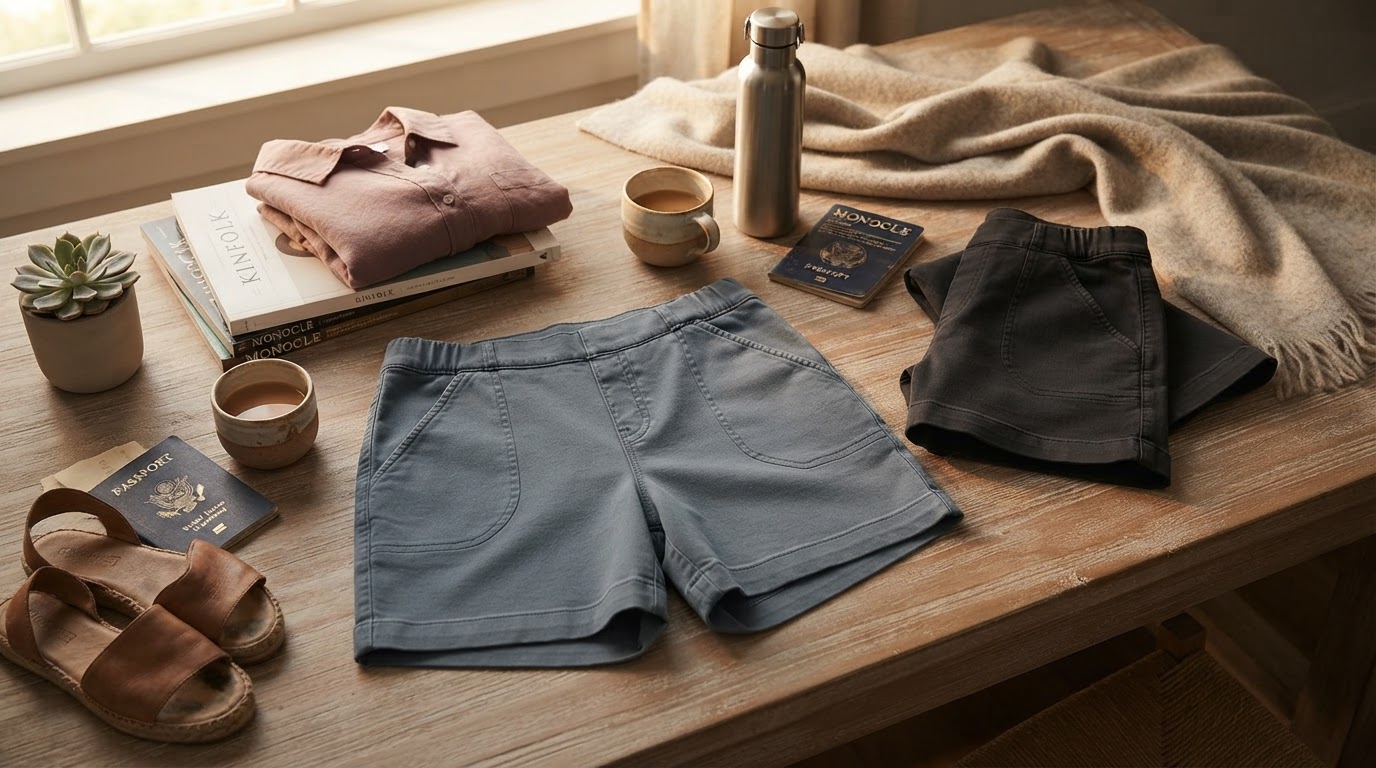
Optimizing Daily Comfort With Women's Comfy Stretch Twill Shorts
 Priya RamanSenior Analyst
August 1, 2026. This analysis examines the intersection of textile durability and ergonomic design in modern casual wear. It is intended for consumers seeking a balance between the structured appearance of traditional twill and the mobility afforded by high-stretch synthetic blends. To evaluate these garments effectively, think of it as a matrix of structure versus flexibility, where the optimal choice resides at the convergence of fabric weight and tensile recovery.
The Technical Limitations of Traditional Twill Fabrics
The primary challenge in selecting summer bottom-wear is the inherent rigidity of standard cotton twill. While historically favored for its durability and characteristic diagonal weave, 100% cotton lacks the recovery properties necessary for extended periods of sitting or active movement. This rigidity often leads to garment deformation, commonly referred to as "bagging out" at the seat or knees, and can cause significant discomfort during physiological changes throughout the day. When considering the best shorts for bloated days, the lack of mechanical stretch in traditional chinos becomes a physical barrier rather than a support. Furthermore, search data indicates that consumers frequently look for mid-length twill shorts for women to avoid the chafing associated with shorter, stiffer cuts. The friction generated by non-stretch fabrics against the skin during high-humidity months contributes to heat retention and localized irritation. Without an integrated elastic component, the waistband remains static, failing to accommodate the natural fluctuations of the human torso. This static nature is why many are pivoting toward the best comfortable shorts for women that prioritize textile innovation over heritage construction methods.
Engineering Mobility in Women's Comfy Stretch Twill Shorts
Photo by Malcoln Oliveira on Pexels
Women's Comfy Stretch Twill Shorts addresses these mechanical failures by integrating specific elastane percentages into a high-density cotton weave. This construction creates a garment that maintains the visual profile of a classic khaki short while providing the functional benefits of performance wear. Two axes matter here: the vertical integrity of the twill weave and the horizontal elasticity of the fiber blend. By utilizing a 5-inch inseam, these shorts provide sufficient coverage to prevent ride-up while remaining breathable enough for peak summer temperatures. The inclusion of an elastic waist is not merely a convenience but a structural necessity for maintaining a consistent fit. Unlike traditional closures that rely on a single point of tension, the soft elastic waist shorts for summer profile allows for a distributed pressure across the iliac crest. This design is particularly effective for those searching for comfortable pull-on shorts for women that do not sacrifice the professional appearance of a finished hem and functional pockets. The stretch twill used here is engineered to return to its original shape after being extended, ensuring that the 5-inch inseam stretch shorts for women remain crisp throughout a full day of wear. This resilience is a key differentiator for those who require their wardrobe to transition from casual office environments to outdoor activities without a change in attire.
A Decision Framework for Selecting Stretch Twill

Photo by Mikhail Nilov on Pexels
Once you see it this way, the selection process becomes a matter of matching specific garment specs to your daily activity level. The decision rule: prioritize a 5-inch inseam for general utility and a minimum 3% elastane blend for all-day comfort. When evaluating your next pair of women's stretch twill shorts, consider the following technical criteria to ensure the garment meets long-term durability standards. You should also cross-reference these needs with the requirements for soft elastic waist shorts for summer if your primary environment involves high heat.
- Fabric Recovery Rate: Ensure the twill blend snaps back immediately when pulled; this prevents the "saggy" look after two hours of wear.
- Inseam Proportionality: A 5-inch inseam is the industry standard for balancing leg mobility with adequate skin protection.
- Waistband Construction: Look for encased elastic that is stitched in place to prevent rolling or twisting during wash cycles.
- Pocket Depth: Functional stretch twill must include pockets deep enough to secure a smartphone without the weight pulling the fabric taut.
- Breathability vs. Opacity: The weave should be tight enough to remain opaque when stretched, yet porous enough to allow thermal regulation.