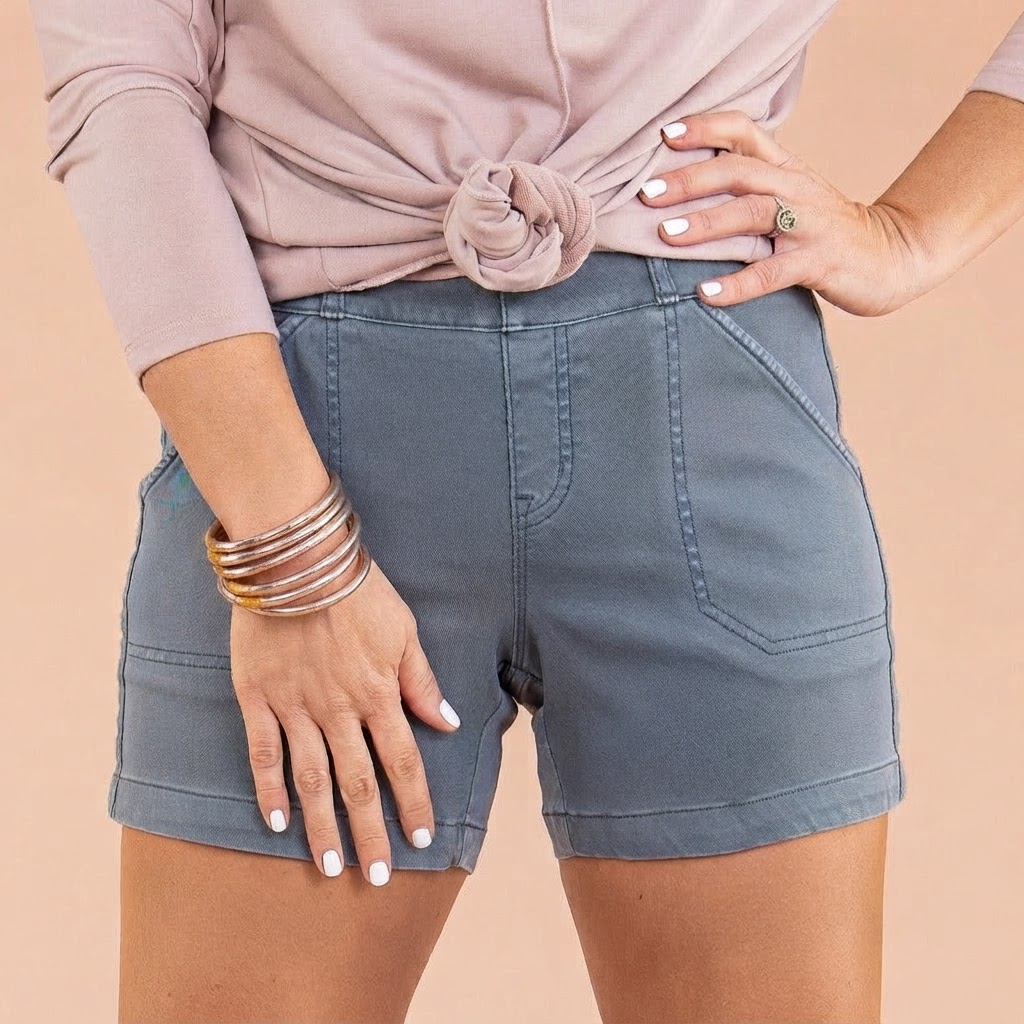
Pull-On Twill Shorts vs. Traditional Zippered Shorts: Which Is Right for You?
Pull-On Twill Shorts vs. Traditional Zippered Shorts: Which Is Right for You?
Choosing between classic zip-front shorts and modern pull-on twill designs comes down to prioritizing structured appearance versus everyday ease. While traditional button-and-zipper shorts have long been wardrobe staples, modern elasticated options deliver identical tailored aesthetics with far superior comfort.
The Evolution of Casual Shorts Design
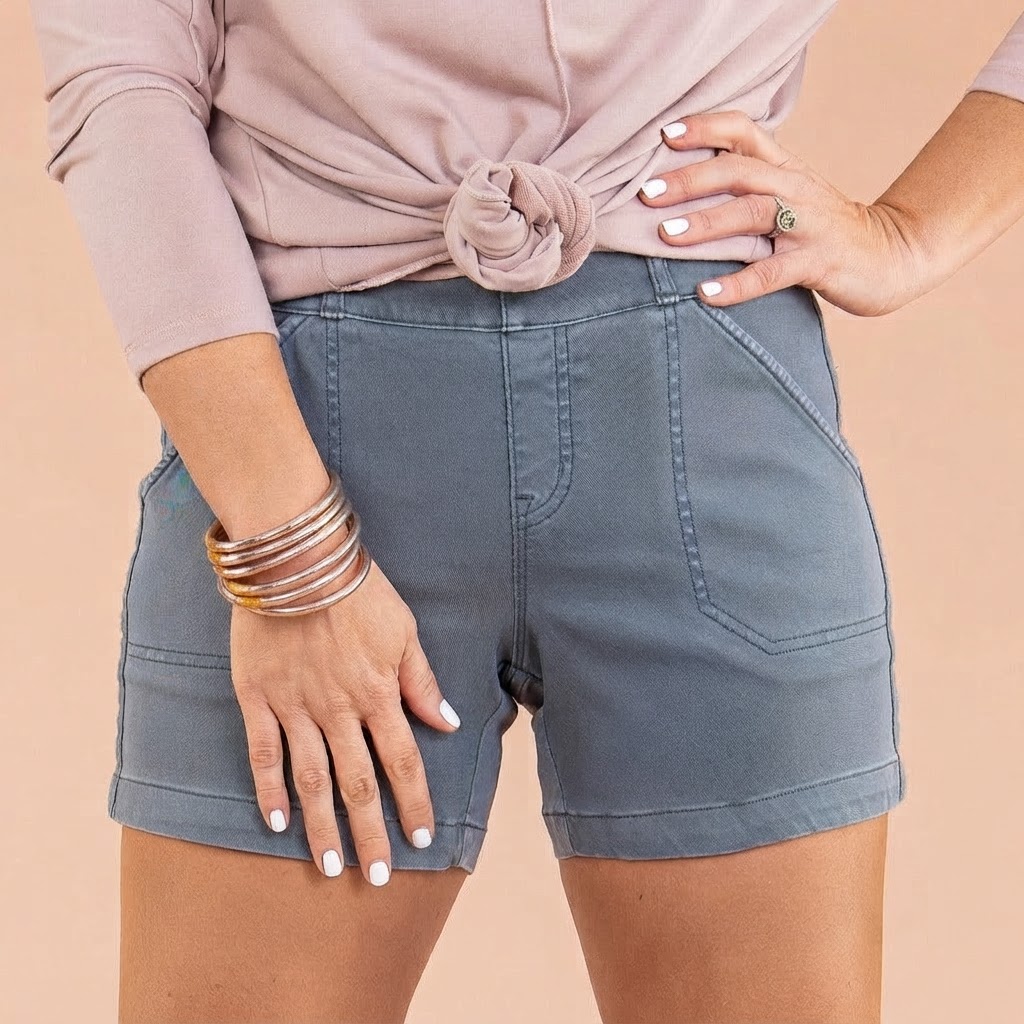
Conventional twill shorts utilize rigid waistbands secured with metal buttons and zippers. While durable, they lack dynamic give when seated. As discussed in [the main guide], contemporary designs like Women's Comfy Stretch Twill Shorts eliminate metal hardware entirely, using No Button & No Zipper pull-on design construction for effortless daily wear. For most of the last century the choice in casual shorts was between tailored construction and comfort, and the reason was material rather than design intent. A woven fabric with no give holds a clean line and does not stretch out, but it also does not move with the body, so comfort had to come from cutting the garment loose.
Elastic-waist shorts solved comfort by giving up on structure entirely, which is why they still read as leisurewear regardless of the fabric above them.
What changed the equation is the availability of woven fabrics with a small proportion of elastane and, crucially, good recovery. That combination allows a garment to look tailored while moving, and it is why the pull-on short in a structured woven fabric is a relatively recent category rather than a longstanding one.
Comparing Waistband Construction and Flexibility
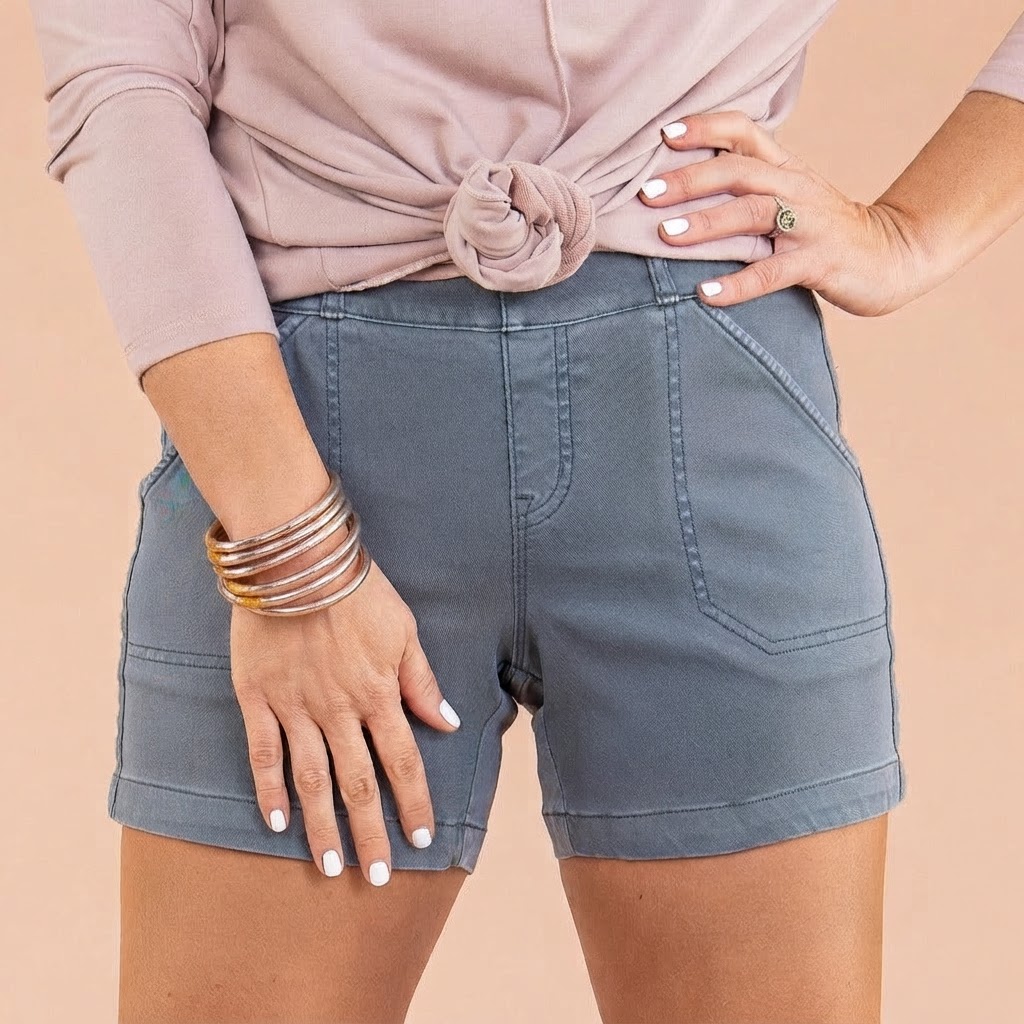
- Traditional Shorts: Offer 0 to 1 inch of waistband give. Can dig into abdomen during sitting or dining.
- Pull-On Twill Shorts: Feature built-in MAX_WAIST_STRETCH_INCHES stretch allowance, automatically adapting to body position changes.
A zip and button waistband concentrates everything at one narrow line, held closed by a single point of hardware. That works well standing and poorly seated, because the abdomen expands naturally when sitting and there is no give anywhere to accommodate it. The metal button pressing into one spot is the specific complaint most people have.
A wide pull-on waistband spreads the same holding force across several inches of fabric. Nothing presses at a single point, and the band flexes with movement rather than resisting it.
The trade-off is genuine. A zip waistband holds a fixed measurement precisely and never shifts. A stretch band relies on its recovery, and if that degrades, through heat, hot washing, or simply years, the waistband loosens and the garment does not hold as it did. A well-made zip short can outlast a stretch one for that reason, provided you can bear wearing it.
Profile and Smoothing Capability under Clothing
Zipper flys create noticeable bulk under thin tees or light knits. Modern pull-on styles provide smooth waistline transitions. Made with lightweight fabric weighing only SHORT_WEIGHT_OUNCES, pull-on styles lay completely flat across the lower stomach.
| Feature | Traditional Zipper Shorts | Stretch Pull-On Shorts | |---|---|---| | Waistband Flexibility | Low | High (MAX_WAIST_STRETCH_INCHES stretch) | | Hardware Bulk | High (Metal buttons/zips) | None (No Button & No Zipper pull-on design) | | Midsection Support | None | Hidden tummy shaping | | Inseam Options | Fixed | Available in 6” and 4” inseams | Under a tucked or fitted top, the two constructions show differently, and this is where the choice is most visible.
A zip fly and a button create bulk at the front, and the hardware can print through lighter fabrics. A flat waistband avoids that entirely, which is why it looks neater under anything close-fitting.
What a pull-on style can introduce, if it is poorly made, is gathering. Thin elastic in a casing bunches fabric around the waist and that bunching is exactly what reads as loungewear. A wide flat band avoids it; a narrow gathered one does not. It is the single most useful thing to look at when judging a pull-on short.
So the smoothing advantage is real but conditional on the construction. A flat, wide band is neater under clothing than a zip fly. Gathered elastic is worse than either.
Which Style Fits Your Lifestyle?
If you prefer high-stretch comfort with a clean front profile, pull-on stretch twill is the superior choice. If you require standard belt loops or heavy-duty denim weight exceeding 2-4 inches oz, traditional zippered shorts remain a valid option.
Read the full guide: The Ultimate Guide to Wearing, Styling, and Caring for Stretch Twill Shorts
The decision usually comes down to how the day is spent.
Choose pull-on if the day involves a lot of sitting, driving, or travel, if a rigid waistband has been a recurring annoyance, if you want a clean line under fitted tops, or if you value getting dressed quickly.
Choose zip and button if you need the most formal option available in a short, if you prefer a waistband that holds one exact measurement indefinitely, or if you want a garment that will last many years with minimal care and are content to trade comfort for that.
On care, the two differ more than people expect. A stretch pull-on short depends on its elastane, and elastane is destroyed by heat, so cold water and air drying are what determine whether it lasts one season or several. A cotton twill zip short tolerates hot washing and tumble drying without much complaint.
Many wardrobes are best served by owning both, using the pull-on style for travel and long days and keeping the tailored pair for occasions that call for it.