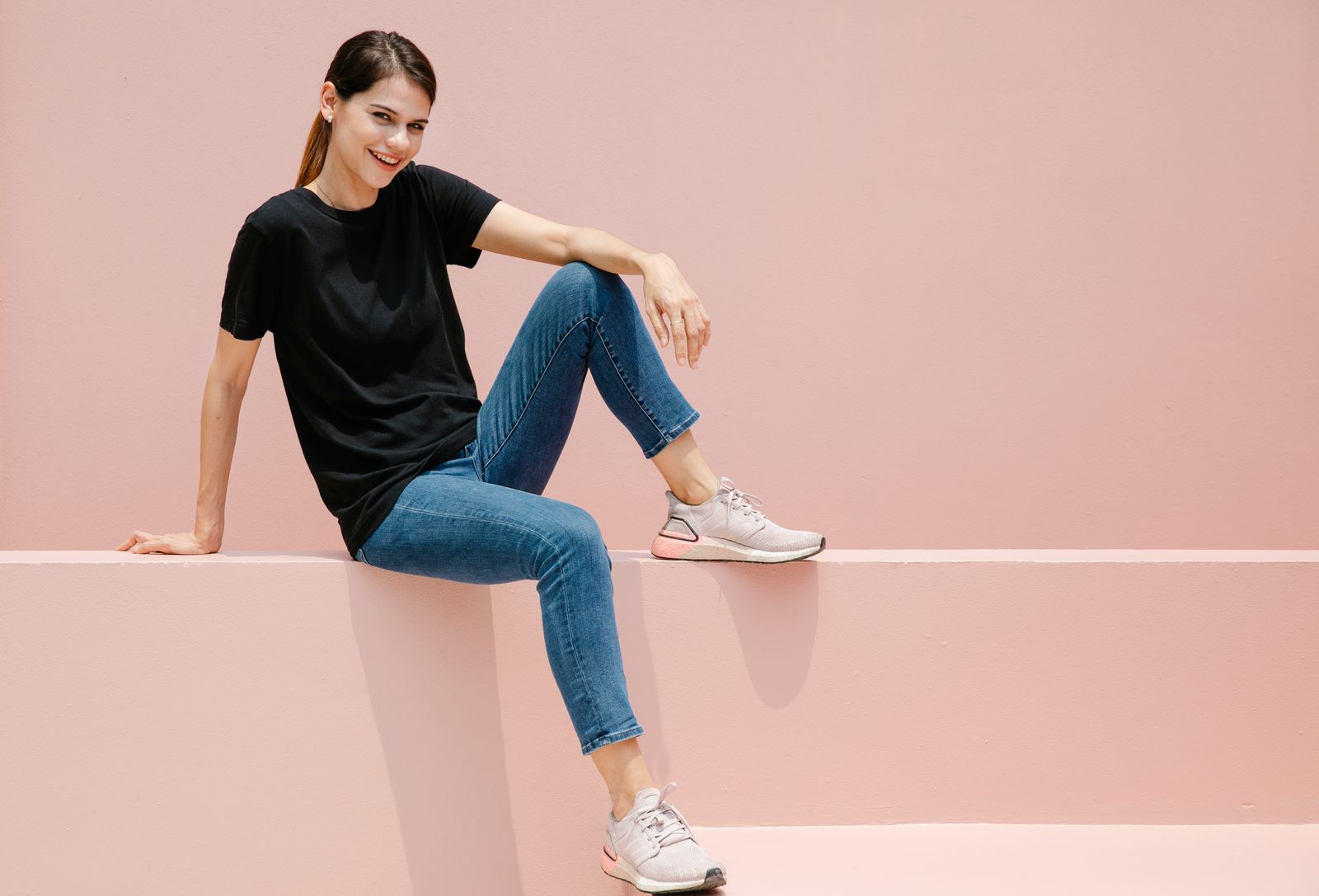
From Sneakers to Wedges: What Shoes to Wear with Stretch Twill Shorts
The four shoes that work with almost any stretch twill short are a clean white leather sneaker, a flat leather slide, an espadrille or block-heel wedge, and a loafer or pointed flat. Sneakers keep the outfit casual, slides keep it easy, wedges make it dressy, and loafers make it look tailored. The one rule that matters more than the style itself is the ankle: the more skin visible between the hem and the shoe, the longer the leg line reads, which is why a low-cut shoe almost always looks better with shorts than a high-top or an ankle boot.
Why does shoe choice matter so much with shorts?
With trousers, the hem covers the ankle and the shoe is a small detail at the bottom of the outfit. With shorts, a large stretch of leg is visible and the shoe sits at the end of it as a visual endpoint. That means the shoe sets the register of the entire outfit.
Two mechanics drive the result:
- Where the shoe cuts the leg. A shoe that ends low on the foot lets the leg line run uninterrupted. A strap across the ankle or a high-top collar creates a horizontal break that visually shortens the leg.
- How formal the sole is. A thin leather sole reads dressy. A chunky rubber sole reads casual. A wedge or heel reads dressed up. Nothing about the shorts changes, only the shoe.
The shoe-by-shoe guide

Photo by Gleb Krasnoborov on Pexels
| Shoe | Formality | Leg-line effect | Pairs best with inseam | Notes | | --- | --- | --- | --- | --- | | White leather sneaker | Casual | Neutral, low cut helps | Both 4-inch and 6-inch | The most versatile shoe on the list | | Leather slide sandal | Casual to smart casual | Lengthening | Both | Easiest upgrade from a flip-flop | | Espadrille wedge | Smart casual to dressy | Strongly lengthening | 6-inch | Best warm-weather height | | Block-heel sandal | Dressy | Lengthening if the strap is thin | 6-inch | Stable enough for outdoor surfaces | | Pointed flat | Smart casual | Strongly lengthening | Both | The pointed toe extends the line | | Loafer | Smart casual | Neutral | 6-inch | Reads tailored, works for office-adjacent days | | Woven flat sandal | Casual | Lengthening | Both | Texture adds interest to a solid short | | Heeled mule | Dressy | Lengthening | 6-inch | Strong evening option | | Ankle-strap sandal | Dressy | Shortening, strap cuts the ankle | 6-inch | Choose the thinnest strap available | | Sport sandal | Very casual | Shortening | 4-inch | Fine for hiking, not for outfits | | Flip-flop | Very casual | Neutral | Either | Undoes any structure elsewhere | | Ankle boot | Transitional | Strongly shortening | 6-inch | Difficult with shorts, skip in summer |
How to pick a shoe in three questions
Sneakers: which kind, and how to keep them from looking sloppy
A low-profile white or cream leather sneaker is the single most useful shoe to own for shorts. It is casual without being athletic, and the light color reflects rather than anchoring the bottom of the outfit.
Choices within the category:
- Low-profile leather sneaker. The default. Works with every inseam and every top.
- Canvas sneaker in a neutral. More relaxed and slightly more summery. Works well with a garment-dyed short since both have a soft, worn-in quality.
- Chunky or platform sneaker. Currently a strong look, but it needs the rest of the outfit to be simple. It also visually shortens the leg, so it pairs better with a high waist that lengthens the torso line.
- Running or trail shoe. Reads as athletic wear. Fine for actual activity, avoid for outfits.
For long walking days, the shoe is genuinely the limiting factor rather than the shorts. The notes on distance walking in twill shorts cover how the fabric behaves over miles.
Sandals: flats, slides, and everything between
Flat sandals are the workhorse of a summer shorts wardrobe, and there is a wide quality range within the category.
- Leather slide. One or two wide straps across the foot, no ankle strap. Clean, lengthening, and reads more considered than any thong sandal. The best value upgrade in this whole list.
- Woven or raffia flat. Adds texture, which is useful when the shorts and the top are both solid. Pairs naturally with a garment-dyed short.
- Thong sandal in leather. A step up from a rubber flip-flop and acceptable for casual daytime, though it still reads relaxed.
- T-strap or gladiator flat. Straps running up the ankle cut the leg line repeatedly. It is a specific look rather than a neutral one.
- Rubber flip-flop. Best reserved for the pool and the beach.
Heels with shorts: how to do it without overdoing it

Photo by Zulfugar Karimov on Pexels
Heels and shorts can look excellent or can look mismatched, and the difference is almost always heel type and inseam.
What works:
- Wedges. The most reliable heel for shorts. The continuous sole keeps the visual weight balanced against a bare leg, and espadrille or cork materials suit summer fabrics. Comfortable enough to stand in for hours.
- Block heels. Stable, current, and substantial enough not to look delicate against a casual fabric.
- Heeled mules. Backless, so the ankle stays open and the leg line stays long. Strong for evening.
- Stiletto sandals. The proportion can tip toward looking dressed for a different occasion. If worn, keep the rest of the outfit understated and choose the 6-inch inseam.
- Ankle-strap heels. The strap creates exactly the horizontal break that shortens the leg. A very thin strap in a color close to the skin minimizes it.
Matching shoes to the color of the shorts
Garment-dyed twill has a soft, slightly faded depth of color, which is forgiving to work with.
- Tan and cognac leather works with nearly every shade and is the most useful neutral for warm weather.
- White and cream keeps things light and works particularly well with mid and deep tones.
- Black is sharper and reads more urban. It works best when something else in the outfit is also black, so the shoes do not sit alone as the only dark anchor.
- Metallic gold or bronze functions as a neutral in summer and dresses an outfit up without adding a color.
- Matching the shoes to the shorts is generally not necessary and can look overly coordinated. Matching the shoes to the bag or belt is the more reliable move.
FAQ
Do socks ever work with shorts? Yes, with sneakers, and it depends on visibility. No-show socks are the neutral choice and keep the ankle bare. A visible sock works when the outfit is intentionally casual and the sneaker is substantial. With sandals, loafers, or heels, skip visible socks entirely.
What shoes work for both a 4-inch and a 6-inch inseam? Sneakers, leather slides, pointed flats, and woven flats all work across both lengths. Heels and loafers pair more comfortably with the 6-inch inseam, which is why that length is the more versatile one if a single pair of shorts has to cover a wide range of occasions.
Can ankle boots be worn with shorts in early fall? It is possible but it is the hardest pairing on this list, because the boot shaft cuts the leg at the narrowest point and makes the gap of bare leg look like a mistake. If attempting it, use a low-cut boot, the longer inseam, and no visible sock. In most cases a loafer or a sneaker handles a cool day better.
Which single pair of shoes should be bought first? A low-profile white leather sneaker if the shorts will mostly be worn casually, or a tan leather slide if the days lean warmer and dressier. Both are neutral, both lengthen or at least do not shorten the leg, and both work with a wide range of tops.
A practical next step
Line up the three pairs of shoes already owned that are most likely to be worn with shorts, and try each one with the same outfit. Photograph all three. The differences in how formal and how balanced the outfit looks will be immediately obvious in the photos in a way they are not in the mirror. From there, the styling guides for a high waist and for casual everyday outfits fill in the top half of the picture.
Cover photo by Angela Roma on Pexels.