Shorts for Gardening and Weekend DIY: Pull-On Twill vs. Cargo Work Shorts
For gardening, yard work, and weekend projects, pull-on stretch twill shorts win on movement, waistband comfort, and cleanup; cargo work shorts win on pocket volume and abrasion resistance. The deciding question is whether the day involves more kneeling and reaching or more carrying of hard tools. Most home gardeners are better served by stretch and a soft waistband than by extra pockets they never fill.
What does gardening actually demand from a pair of shorts?
Gardening is not a single motion. Over an hour in the beds, the body cycles through deep squats, kneeling, hinging at the hip, reaching overhead to prune, and sitting back on the heels. Each of those puts a different load on a garment.
- Squatting and kneeling stretch the fabric across the seat and thigh. A woven cloth with no give either binds or forces you to stand up.
- Hinging at the waist pushes the waistband forward. A rigid button and zipper concentrate that pressure at one point on the front of the waist.
- Bending repeatedly exposes the lower back. A high-waisted cut stays put where a low rise migrates down.
- Kneeling on soil grinds dirt into the fabric at the leg opening and along the thigh.
- Carrying tools loads pockets. Weight in a pocket drags the whole garment down unless the waistband holds.
Pull-on stretch twill versus cargo work shorts
Photo by cottonbro studio on Pexels
| Requirement | Pull-on stretch twill | Cargo work shorts | |---|---|---| | Squat and kneel range | 4-way stretch moves with the motion | Depends entirely on added elastane; often restrictive | | Waistband when bent forward | Pull-on, no button or zipper pressing at the front | Hard closure sits in one fixed position | | Pocket volume | Patch pockets for phone, keys, plant tags | Large bellows pockets for pruners and gloves | | Weight when pockets are loaded | Light; stays put on a high waist | Heavy; loaded thigh pockets swing and drag | | Abrasion at the knee and hem | Moderate | Higher; built for rough contact | | Comfort in heat | Soft, close-draping, minimal bulk | Bulkier, more seams and flaps | | Getting changed after the garden | Steps on and off in seconds | Closure to undo, often stiff with dirt | | Looks acceptable off the property | Yes, reads as regular shorts | Reads as work gear |
The pattern is consistent: cargo shorts are engineered for carrying and scraping, and stretch twill is engineered for moving and then getting on with the rest of the day.
Why the waistband matters more than most people expect
Time spent bent forward is the single most uncomfortable part of gardening in the wrong clothes. A traditional closure places a rigid button and a zipper track directly across the front of the waist. Fold at the hip and that hardware digs in. Do it two hundred times over a Saturday morning and it is the thing you remember.
A pull-on design removes both. With no button and no zipper, the waistband is one continuous band of fabric that flexes with the fold and redistributes pressure around the waist instead of concentrating it at a single point. It also allows a wider range of fit through the day, which matters when heat, water, and lunch all have their say.
The hidden tummy shaping built into these shorts sits smooth under a tucked or untucked top, so the waistband stays streamlined rather than adding bulk at exactly the spot that presses when you bend. And because the fit is high-waisted, the back stays covered while kneeling — a small thing that becomes noticeable the first time it fails.
What about dirt, stains, and grass?
Three practical realities of garden clothing, and how garment-dyed twill handles each.
Soil. Dry soil brushes off a dense twill weave more readily than it releases from a loose or napped fabric. The diagonal weave has a tight surface, so dirt sits on top rather than working into the structure.
Grass and plant stains. These are the hardest category on any cotton-based cloth. Rinsing promptly matters far more than the fabric does. Do not let a green stain dry in the sun.
Color transfer, in reverse. Worth knowing before the first wear: garment-dyed fabric is dyed after the shorts are constructed, so a new pair carries loose surface dye that can transfer onto lighter materials or surfaces. In garden terms, that means being thoughtful about pale cushions on the patio furniture and cream-colored kneeling pads with a brand-new pair. Washing them inside out preserves the worn-in look and clears the loose dye over the first several washes.
The fade is intentional. Garment-dyed stretch twill gradually lightens as it is washed and worn. For garden clothes this is an advantage rather than a problem — a pair that softens and fades over two seasons is exactly what most people want in the clothes they garden in.
Heat, and why bulk matters more than coverage
Garden work happens in the hottest part of the year, often in direct sun, and the instinct is to reach for the lightest, loosest thing available. That instinct is only half right.
What makes outdoor work uncomfortable in heat is usually bulk rather than coverage. Extra flaps, cargo pockets with reinforced edges, heavy belt loops, and thick closures all add layers of fabric at the hip and thigh, exactly where sweat collects and where a bent-forward posture compresses everything together. A short with a slim profile and a soft waistband has far less material sitting against skin, even when the leg is longer.
Twill also drapes rather than standing away from the leg, so the fabric moves as you move instead of catching and bunching behind the knee. Garment-dyed twill has a second practical advantage in the sun: its slightly uneven, worn-in surface disguises damp patches that show plainly on flat, pale workwear fabric. After three hours of weeding, that is the difference between looking hot and looking finished.
Choosing an inseam for yard work
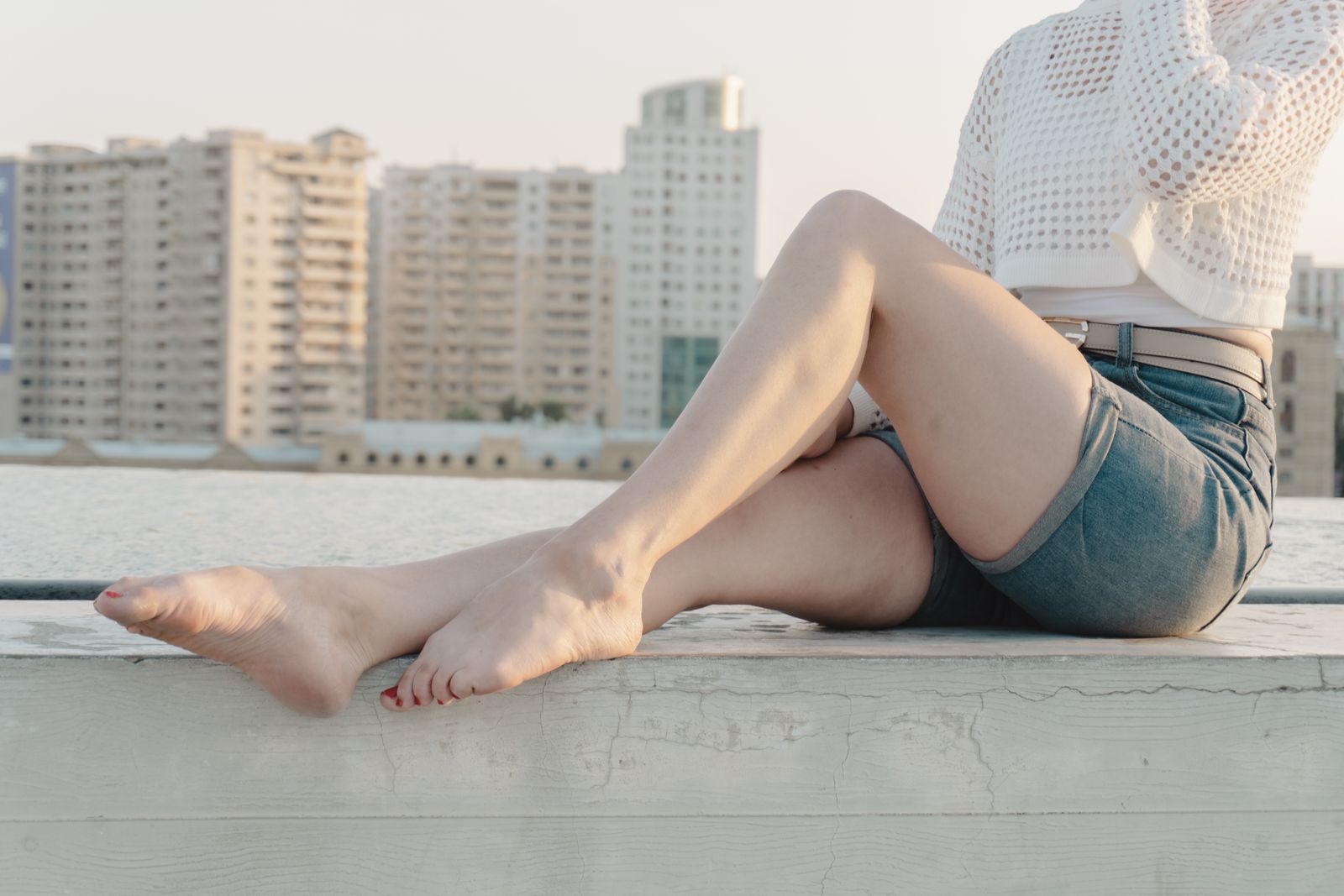
Photo by Zulfugar Karimov on Pexels
Length is a real decision here, not a style preference.
A 6-inch inseam covers more of the thigh. Kneeling, that extra coverage sits between skin and soil, gravel, or mulch, which is the practical case for the longer option. It also reduces inner-thigh rubbing during a long day of walking a property.
A 4-inch inseam runs cooler and gives an unobstructed range at the hip, which suits stand-up tasks — deadheading, watering, potting at a bench — and hot afternoons where coverage is the thing you want less of.
A reasonable approach for anyone who gardens seriously: the longer inseam for planting and weeding days, the shorter one for maintenance and watering. The full-length fit guide for stretch twill shorts walks through how the two lengths sit differently.
A four-step routine for garden and DIY days
FAQ
Are stretch twill shorts durable enough for real yard work? For gardening, planting, watering, potting, and typical household projects, yes — twill is a densely woven, hard-wearing structure. For work that drags the knees across concrete or scrapes against rough timber all day, purpose-built work shorts with reinforced panels are the better tool.
Do patch pockets hold enough for gardening? They comfortably hold a phone, keys, plant tags, twine, and a small pair of snips. They are not a substitute for a tool bucket or apron when hauling a full kit, and no pocket handles a loaded pair of loppers well. This look at how the pockets actually perform covers what fits.
Will the shorts stretch out from all the squatting? Repeated deep flexion temporarily relaxes any woven fabric. The point of 4-way stretch is recovery — the fibers return toward their original dimension rather than staying elongated. A wash restores the fit if a long day has left the fabric feeling looser.
Is a pull-on waistband secure with weight in the pockets? A high-waisted pull-on band holds well with normal pocket contents. What defeats any waistband is a genuinely heavy tool in one pocket, which pulls asymmetrically. Balance the load or move it off the garment entirely.
A practical next step
Pick the next real garden task and dress for its lowest position rather than its temperature. Kneel down in the shorts before heading outside: check that the back stays covered, that nothing presses at the front of the waist, and that the leg opening does not ride up when the knee bends. Shorts that pass that thirty-second test will hold up for the whole afternoon.
Cover photo by 董 小姐 on Pexels.