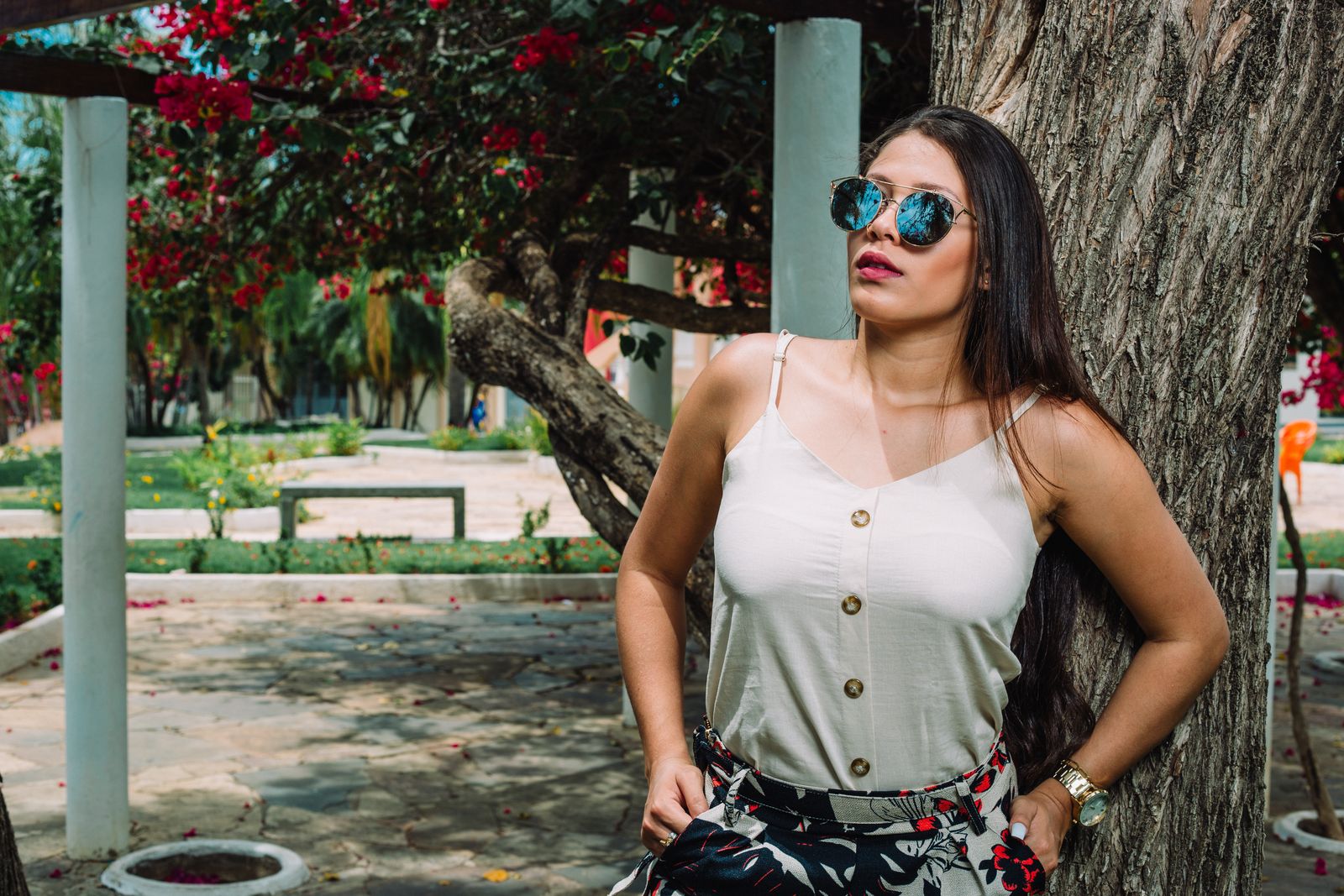
The Silhouette Guide: How to Style High-Waisted Tummy Shaping Shorts for Any Body Type
High-waisted shorts with hidden shaping work with every silhouette, and styling them well comes down to three decisions rather than to body type: where the waistband sits, how the top meets that waistband, and which inseam creates the proportion you want. Set the band at the natural waist, choose a top that ends at or above it, and pick the inseam that gives the leg line you prefer. Everything else is preference.
This guide is about how a garment behaves and what visual effects different combinations produce. There is no version of a silhouette that needs correcting — the goal is simply finding the combinations you like looking at.
What does the high waist actually do visually?
A high-waisted short places the waistband at or near the narrowest point of the torso. That creates a visible horizontal line high on the body, and it divides the outfit into a shorter upper section and a longer lower section.
The visual consequences are consistent:
- The leg line reads longer, because the point where the leg appears to begin has moved up.
- The waist becomes a defined feature rather than being obscured by a top that runs past it.
- The outfit looks structured, because a clear division reads as intentional composition.
- Tucking becomes possible, which is the single biggest styling lever available.
How hidden shaping differs from shapewear
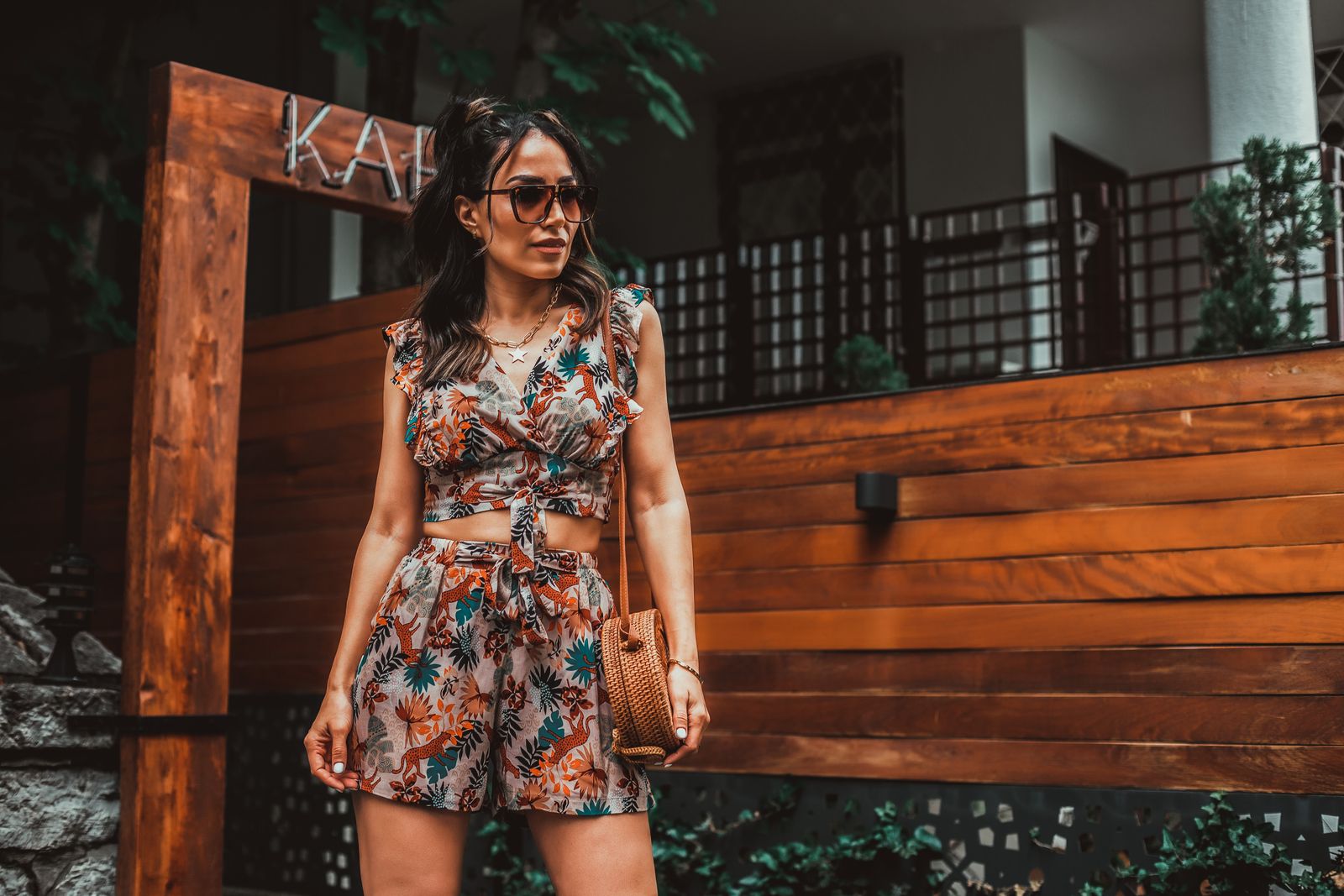
Photo by Meriç Aydın on Pexels
Hidden tummy shaping is a construction feature, not a compression garment. It is built into the front panel and waistband of the shorts so the fabric lies smooth across the front instead of pulling or folding.
Practically, that means:
- It should feel like an ordinary waistband. No squeeze, no rolled edge digging in, no need to adjust it while sitting.
- The effect is visual rather than physical. The shorts create a clean line because of how they are cut and how the fabric is supported, not because they are holding anything in place.
- It works better under fitted tops than a compression panel does, because there is no separate layer edge to show through.
- It stays comfortable across a long day, which is the main practical difference from shapewear.
The three styling decisions that determine the silhouette
1. Where the waistband sits
Wear the band at the natural waist, which is the point where the torso bends when you lean to one side. Pulled higher than that, the band sits on the ribcage and feels restrictive. Worn lower, it loses the proportion advantage and is more likely to shift down through the day.
Test it by sitting down. A correctly positioned high waistband stays where it was placed and does not roll or gap at the back.
2. How the top meets the waistband
| Top style | Where it should end | Resulting silhouette | | --- | --- | --- | | Fitted knit shell | Fully tucked | Most defined waist, longest leg line | | Silk camisole | Fully tucked | Fluid on top, structured at the waist | | Button-down shirt | Half tucked at the front | Relaxed but deliberate, softer waist | | Cropped top | Ends at or just above the band | Waistband visible, most casual and youthful | | Boxy tee | Tucked, or ends right at the band | Clean and simple, needs the tuck to define the waist | | Longline cardigan or blazer | Open, past the hip | Long vertical line, waist still visible through the opening | | Top ending mid-hip | Not recommended | Covers the waistband, shortens the visible leg |
The last row is the one that undermines the outfit. A top that ends midway down the hip hides the defined waist and cuts the leg. If a favorite top falls there, wear it with a longer bottom rather than with high-waisted shorts.
3. Which inseam
The 4-inch and 6-inch inseams create genuinely different pictures with the same high waist.
- 4-inch inseam. Shows more leg, reads more relaxed and summery, pairs naturally with flats and sneakers. Best for casual daytime and warm weather.
- 6-inch inseam. Reads more tailored, closer to a trouser short, and takes a heel or a loafer comfortably. Best for anything with an implied dress code, for travel, and for days that include a lot of sitting.
Silhouette effects and how to get them
Rather than sorting by body type, sort by the effect you want. Any of these combinations works on any frame.
To emphasize a defined waist:
- Fully tuck a fitted top
- Add a slim belt at the top edge of the waistband
- Keep the top in a color that contrasts with the shorts, so the division is visible
- Choose the 6-inch inseam for balance
- Tuck fully and wear the band at the natural waist
- Match the shoe color to the leg tone, or wear a nude or metallic sandal
- Choose a pointed flat, a slide, or a wedge over an ankle-strap shoe
- Skip visible socks
- Half tuck a woven shirt
- Choose the 4-inch inseam
- Wear a flat sandal or a canvas sneaker
- Keep accessories minimal
- Wear a tonal outfit, with the top and shorts in nearby shades
- Add an open longline layer that runs past the hip
- Keep the shoe in the same family as the shorts
- Avoid a strong horizontal contrast at the hem of the top
Working with the fabric's own behavior
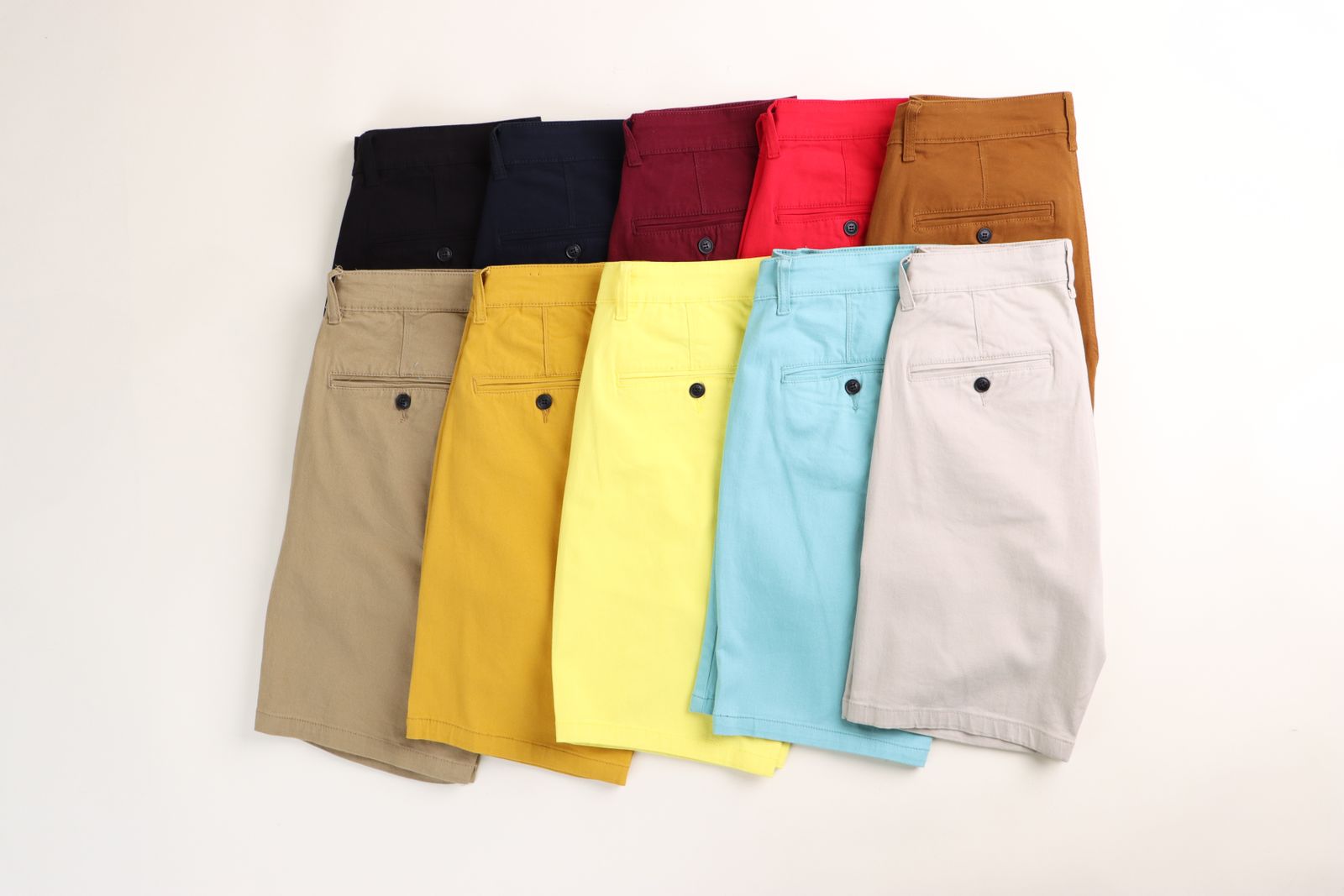
Photo by Luis Quintero on Pexels
Stretch twill shapes an outfit differently than a knit or a linen would, and knowing how helps.
- It holds a leg line. The dense diagonal weave keeps the hem and the leg opening where they were cut, which is why the short reads structured even with a soft waistband.
- 4-way stretch means it moves and recovers. Sitting for an hour does not leave the front of the thigh creased and bagged.
- Garment dyeing gives the color depth. The surface reads slightly worn-in rather than flat, which keeps a structured short from looking stiff and pairs well with crisp white or fine knits.
- The color will soften over time and can transfer onto lighter materials early on. Wash inside out in cold water to keep the shade, and give a new dark pair a wash before pairing it with a cream bag.
A five-step method for building an outfit
FAQ
Does the waistband roll down when sitting? A wide, shaped high waistband resists rolling because it grips over a large surface area above the point where the torso bends. If a band rolls consistently, it usually means the size is smaller than needed rather than that the design is at fault. Sizing to the natural waist measurement rather than to a hip measurement solves most rolling.
Can high-waisted shorts be worn with an untucked top? Yes, as long as the top ends at or just above the waistband. A cropped or shorter top leaves the waist visible and keeps the proportion. A top that runs past the waist and stops at the hip is where untucked pairings tend to fall flat, because the defined waistline disappears.
Will hidden shaping be visible through a fitted top? It should not be, which is the practical advantage over a separate shapewear layer. Because the shaping is built into the garment's own front panel and there is no button or zipper, the front presents as one smooth surface with no edge or seam to show through fine fabric.
How should the fit be judged when trying them on? Sit, stand, walk a few steps, and reach up. The waistband should stay in place through all four without adjusting. Then check the leg opening while seated: a good fit does not pull tight across the front of the thigh. Stretch twill has give, but the fit should not be depending on that give to be wearable.
A practical next step
Take the two tops most often reached for and check where each one ends against the waistband. That one measurement predicts almost everything about how the outfit will look, and it takes a minute. If both tops end at the hip, the fastest improvement available is not a new pair of shorts but one fitted top that can be tucked. From there, the general high-waist styling guide has more combinations to work from.
Cover photo by Elias de Carvalho on Pexels.