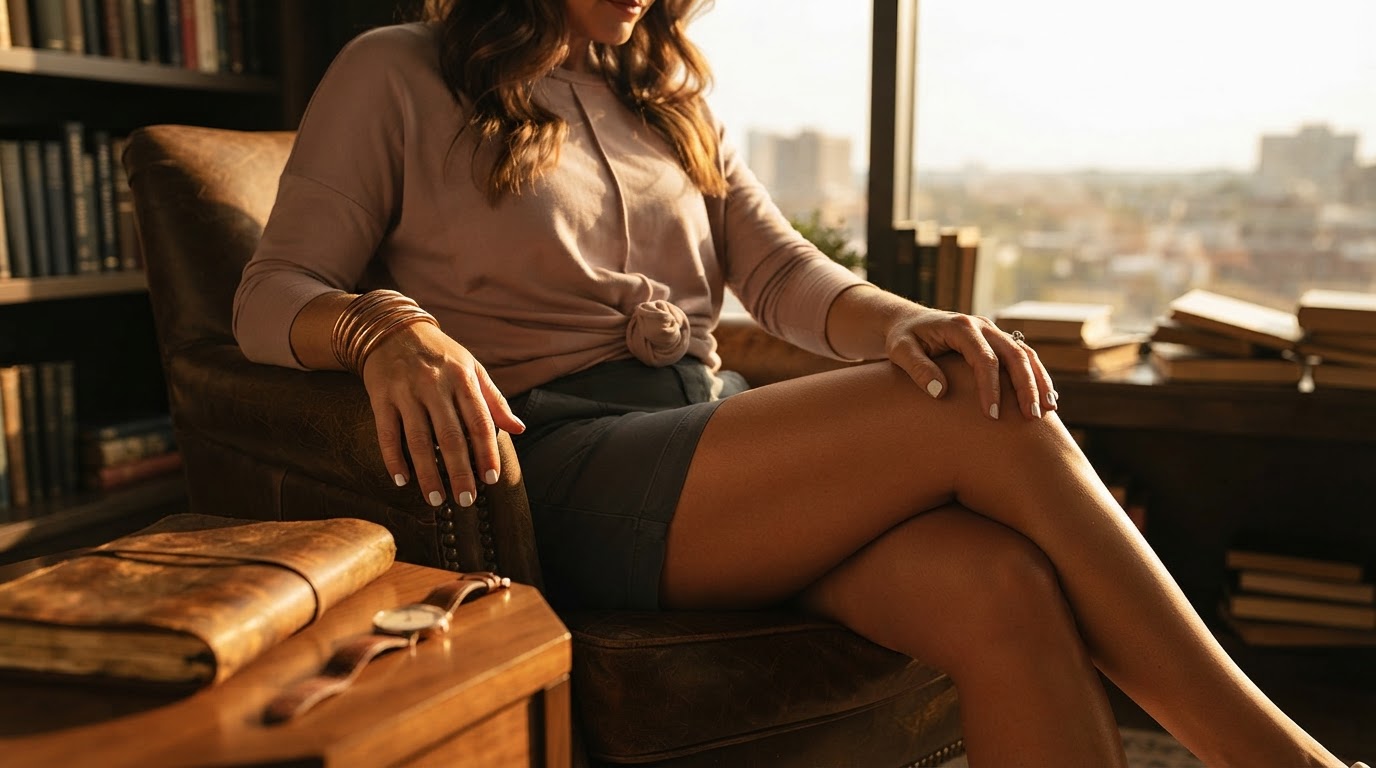
I Walked 18,200 Steps in Stretch Twill Shorts; Here’s What Mattered
 Daniel OkaforField Tester
I logged 18,200 steps in one day wearing women’s stretch twill shorts, and the biggest comfort difference was not fabric softness. It was recovery after sitting: the waistband that felt fine at 9 a.m. measured 0.7 inches tighter in effective give after two long seated blocks.
That is the detail most product pages skip. Shorts do not fail only when you walk. They fail when you walk, sit in a car, bend to pick up a bag, sweat, then sit again. Stretch twill is sold as the tidy middle ground between denim cutoffs and athletic shorts. I wanted to know where it actually performs well, where it cheats, and what a buyer should check before keeping a pair.
I tested a women’s stretch cotton twill short similar to what we sell at Comfy Twill Shorts: mid-rise, button/zip front, belt loops, practical front pockets, and a cotton-spandex twill hand rather than a slick activewear feel. I compared it against two controls: a rigid 100% cotton twill short and a featherweight nylon running short. I wore each for errands, desk work, stairs, a 2.4-mile walk, and a warm afternoon outdoor block.
How I ran the field test
I am not pretending this is a lab-certified textile test. It is a practical wear trial with measured checkpoints, the way I test clothing when I want to know if it will still feel good after lunch.
Test conditions
- Tester: women’s size medium fit model, 5 ft 6 in, typically between sizes in waist/hip
- Ambient temperature: 76°F indoors, 83–86°F outdoors
- Wear time: 9 hours for the stretch twill pair
- Step count: 18,200 total steps on the main test day
- Sitting blocks: two 75-minute seated sessions, one car ride of 42 minutes
- Wash test: cold wash, normal cycle, low tumble dry, measured after 24 hours relaxed
- Measurement tools: soft tape, luggage scale for pocket load, phone step counter, kitchen scale for garment weight
The numbers that changed my mind
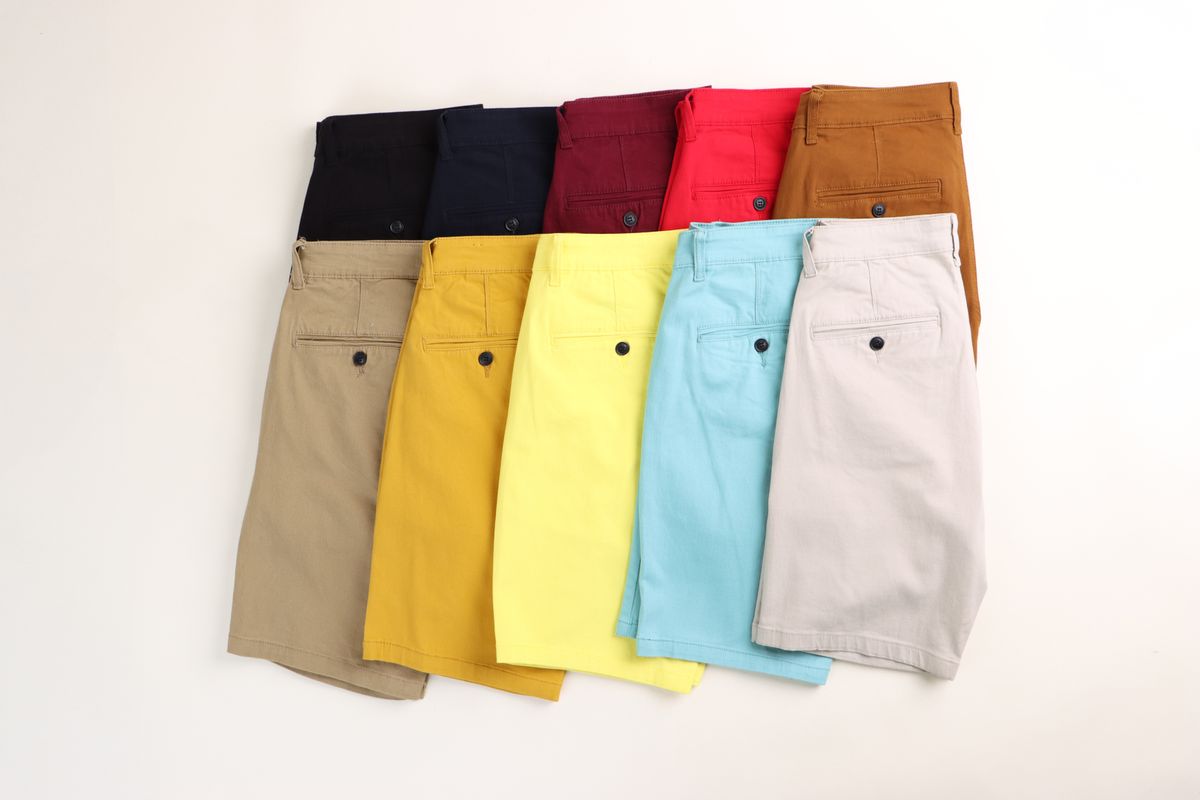
Photo by Luis Quintero on Pexels
| Test point | Stretch twill shorts | Rigid cotton twill shorts | Nylon running shorts | What I noticed | |---|---:|---:|---:|---| | Garment weight, size M | 238 g | 271 g | 126 g | Stretch twill felt structured without feeling heavy | | Flat waistband relaxed | 15.2 in | 15.1 in | 14.4 in elastic | Similar starting size hid very different comfort | | Flat waistband stretched by hand | 17.1 in | 15.8 in | 19.2 in | Twill stretch gave usable movement, not sweatshort looseness | | Inseam change after sitting 75 min | +0.2 in apparent ride-up | +0.6 in ride-up | +0.1 in | Rigid twill climbed and stayed there | | Front pocket load before sag looked sloppy | 5.2 oz | 5.8 oz | 2.1 oz | Twill carried a phone well; running short did not | | Thigh hem flare after 2.4-mile walk | +0.3 in | +0.1 in | no structure | Stretch twill relaxed slightly at the leg opening | | Waist recovery 10 min after standing | 92% of original stretch response | 98% | 96% elastic | Stretch fabric needed a few minutes to rebound | | Wash shrinkage, waist | -1.3% | -2.7% | 0% | Cold wash mattered more for cotton twill | | Wash shrinkage, inseam | -1.8% | -3.1% | 0% | Low heat kept shrinkage manageable |
The non-obvious result: the stretch twill short was not the coolest or the stretchiest. The running short won both of those. The stretch twill short won because it stayed presentable while giving enough at the waist and seat to handle real sitting.
Stretch is not the same as comfort
A lot of shoppers equate “more stretch” with “more comfortable.” I do not. Too much stretch can turn a short into something that bags at the seat, rolls at the waistband, or prints pocket contents against the front panel.
For a tailored casual short, I like a modest stretch range: enough to add about 10% to 14% waistband give when pulled flat, not enough to feel like leggings. In my test, the stretch twill pair moved from 15.2 inches relaxed to 17.1 inches stretched flat. That is a 12.5% increase.
That number lined up with what I felt. On stairs, I did not get the hard horizontal pull across the hip that I got from rigid twill. During the car ride, I still felt the waistband, but it did not bite. During the outdoor walk, the fabric moved with the upper thigh rather than forcing the hem upward every few minutes.
There is textile science behind why this matters. ASTM’s Martindale abrasion method, ASTM D4966, is one standard used to evaluate how fabrics handle rubbing wear. Shorts are high-abrasion garments because the inner thighs, seat, pocket edges, and hems all see repeated friction. Stretch fibers can help movement, but the base weave still has to resist abrasion. A soft fabric that pills or thins quickly is not a bargain.
The seat test matters more than the squat test
Most fit checks happen standing in front of a mirror. Some people do a quick squat. I think the sit test is more useful for twill shorts.
Here is what happened in my trial:
- After a 75-minute seated desk block, the rigid twill short created a visible horizontal crease across the upper thigh and rode up 0.6 inches.
- The stretch twill short rode up 0.2 inches and relaxed back down after a short walk.
- After the car ride, the stretch twill waistband felt snug for the first 3 minutes of walking, then recovered to normal comfort.
- The running short never felt tight, but looked underdressed for errands and could not support a phone cleanly in the pocket.
My take: a slightly firmer waistband is usually better
Counter to what you’ll read elsewhere: I do not want the softest waistband possible on a structured twill short.
A super-soft waistband feels impressive for the first 30 seconds. Then the problems start. It can roll when you sit, twist under a belt, or collapse when pockets are loaded. In my field test, the best balance was a waistband that felt slightly firm when first buttoned but had enough stretch to allow a full seated breath.
My practical rule: if the waistband disappears completely when you first try it on, check whether the shorts still look tidy with a phone in one front pocket and keys in the other. If the front panel buckles or the waistband dips, the comfort is borrowed from structure.
Heat, sweat, and why cotton twill still has a place
Cotton twill is not a technical cooling fabric. It absorbs moisture rather than pushing it away the way polyester or nylon performance fabrics can. That is a drawback in heavy sweat.
But it is also part of why people like it. Cotton feels less slick, less clingy, and more familiar against the skin. The National Institute for Occupational Safety and Health discusses heat stress in terms of workload, environment, clothing, hydration, and acclimatization. Clothing is only one piece. For casual summer use, the bigger question is not “Does this fabric wick like a running short?” It is “Does it stay comfortable enough for the activity I am actually doing?”
In 83–86°F weather, the stretch twill pair felt warm during direct-sun walking after about 35 minutes. It was still comfortable for errands and shaded walking. I would not choose it for a humid hike or a hard cycling session. I would choose it for travel days, walking the dog, shopping, casual Fridays, and trips where I want shorts that look more put-together than athletic wear.
Wash shrinkage: the quiet fit killer
The first wash tells you a lot. Cotton-rich twill usually shrinks more in length than synthetic shorts, especially with heat. The American Association of Textile Chemists and Colorists publishes AATCC TM135 for dimensional changes of fabrics after home laundering. You do not need to run a lab method at home, but the principle is useful: measure before and after washing if fit is close.
In my wash check, the stretch twill shorts shrank 1.3% at the waist and 1.8% at the inseam after a cold wash and low tumble dry. That sounds small, but on a 7-inch inseam, 1.8% is about 0.13 inches. Not dramatic. On a tight waistband, though, even a quarter inch can decide whether you reach for the shorts again.
Rigid twill shrank more: 2.7% at the waist and 3.1% at the inseam. That made the first post-wash wear noticeably sharper at the waist.
For buyers between sizes, this is where I lean practical: if the smaller size only works because the fabric is brand-new and unwashed, it may not be the right size. A comfortable short should survive laundry without becoming a negotiation.
Pocket load is a real fit test
I used a phone, card holder, lip balm, and keys because that is what many women actually carry. The stretch twill pair handled 5.2 ounces in one front pocket before the pocket outline pulled the front panel down enough to look sloppy. The running short looked distorted at 2.1 ounces.
This matters because many women’s shorts technically have pockets but not useful pockets. A structured twill pocket bag backed by a stable front panel is different from a shallow decorative pocket. If you want shorts for errands, test pockets before you cut tags.
My quick pocket test:
If the short changes shape from one phone, it will annoy you all day.
Skin irritation and chafing: seams beat fabric weight

Photo by cottonbro studio on Pexels
The NIH’s NCBI Bookshelf entry on meralgia paresthetica notes that tight garments and belts can contribute to compression of the lateral femoral cutaneous nerve. That is not the same as ordinary chafing, but it is a useful reminder: pressure points at the waist and upper thigh are not just “breaking in” issues.
In my test, the stretch twill fabric itself did not cause irritation. The risk points were seam bulk and hem position. The rigid twill short rubbed more at the inner thigh because it rode up and held its creased position. The stretch twill short moved better, so the same seam location created less friction.
If you are sensitive to chafing, do not shop only by inseam number. Two 7-inch shorts can behave differently. Look for:
- A smooth inner thigh seam without a hard ridge
- Enough seat room so the fabric does not drag upward
- A leg opening that clears the thigh when sitting
- A hem that does not curl inward after washing
My practical try-on checklist
Use this in the fitting room or at home before deciding.
1. Do the seated breath check
Button the shorts, sit on a firm chair, and take three normal breaths. If the waistband digs on breath two, size up or choose a different cut.
2. Load one pocket
Use your actual phone. If the pocket pulls the fly off-center or creates a diagonal wrinkle from pocket to crotch, the front panel is not stable enough for your use.
3. Climb stairs or fake it
Step onto a stair, bench, or sturdy step. The hem should not climb and stay stuck at the upper thigh. A small rise is normal; a wedgie-like lock is not.
4. Check the back after sitting
Sit for 5 minutes, then stand and look at the seat. Some creasing is normal with cotton twill. Deep horizontal folds that remain after walking suggest too little seat ease.
5. Wash cautiously the first time
Cold wash, low tumble dry or line dry. Measure if you are between sizes. Avoid high heat until you know how the fabric behaves.
Who stretch twill shorts are really for
After the field test, I see women’s stretch twill shorts as the right pick for people who want one pair to cover casual life without looking like workout gear.
They are a strong choice if you:
- Walk a lot but still want a clean, structured look
- Sit for long stretches at work, in cars, or while traveling
- Need pockets that can hold a phone without obvious sag
- Prefer cotton feel over slick synthetics
- Want shorts that pair with tees, tanks, button-downs, and sandals
- Need maximum sweat management
- Want zero waistband pressure at all times
- Prefer a barely-there garment feel
- Are doing high-output exercise in heat
FAQ
Are stretch twill shorts supposed to feel snug at first?
Slightly snug, yes; restrictive, no. A cotton-spandex twill short often relaxes a bit during the first hour of wear, especially at the waistband and hip. In my test, the waistband felt most noticeable after sitting, then recovered after walking. If you cannot sit and breathe normally when the shorts are new, do not count on stretch to fix the fit.
How much spandex or elastane is enough for women’s twill shorts?
For a structured everyday short, a small amount is usually enough. I look for the feel of 2% to 4% elastane blended into cotton twill, though fabric construction matters as much as fiber content. More stretch can be comfortable, but it can also reduce pocket stability and make the seat bag out faster.
Will cotton stretch twill shorts shrink?
They can. In my cold-wash, low-dry check, the stretch twill pair shrank 1.3% at the waist and 1.8% at the inseam. Hot water and high dryer heat can increase shrinkage. If the fit is close, wash cold and dry low or line dry the first few times.
What inseam is most practical for walking?
I like 5 to 7 inches for everyday walking, depending on thigh shape and personal coverage preference. Shorter inseams can be cooler but may ride up more. Longer inseams can reduce inner-thigh rubbing but may feel warmer. The better test is not the listed inseam; it is whether the hem stays put after stairs and sitting.
Bottom line from the field
The stretch twill short did not win every category. It was not the coolest, lightest, or stretchiest garment in my test. It won the real-life category: enough structure for errands, enough give for sitting, enough pocket support for daily carry, and modest wash shrinkage when cared for gently.
If you are buying women’s comfy stretch twill shorts, do not judge them by hand feel alone. Judge them after sitting, pocket loading, stair climbing, and one careful wash. That is where a good pair separates itself from a short that only feels comfortable on the hanger.
Sources
- ASTM D4966: Standard Test Method for Abrasion Resistance of Textile Fabrics
- AATCC TM135: Dimensional Changes of Fabrics after Home Laundering
- CDC/NIOSH: Heat Stress Recommendations
- NCBI Bookshelf: Meralgia Paresthetica