
Stretch Retention FAQs: Keeping Your High-Waisted Pull-On Shorts Fitting Like New
Stretch shorts lose elasticity mainly from three things: heat, constant tension without recovery time, and the natural aging of elastic fiber. Most of what feels like "stretched out" after a few months is actually fiber that has not been given time to recover, and that part is fixable. The permanent losses come from hot water, hot dryers, and wearing the same pair every day without rotation.
Why does a pull-on waistband feel looser after a few months?
Because elastic fiber needs recovery time, and daily wear rarely gives it any. A four-way stretch woven fabric is held under mild tension for every hour it is worn — more at the waist, seat, and thigh when sitting. The elastic filaments in the yarn respond by elongating slightly. Given twelve to twenty-four hours off the body, they contract back to near their original length. Worn again the next morning, they start the day already slightly extended, and the deficit accumulates.
This is the reason a single pair worn five days a week feels tired long before three pairs worn in rotation do, even though the rotation puts the same total hours on the fabric. It is also why shorts often feel snug again after a rest day, then loosen over the course of a long day of sitting. That daily loosening is normal fabric behavior, not a sizing problem.
What is the difference between temporary give and permanent stretch-out?

Photo by cottonbro studio on Pexels
Temporary give returns after a wash and a rest. Permanent stretch-out does not. The distinction is worth knowing, because the response is completely different.
| What you notice | Likely cause | Reversible? | What to do | |---|---|---|---| | Loose at the waist by evening, fine in the morning | Normal elongation under wear | Yes | Nothing — this is designed behavior | | Still loose the morning after a wash | Not enough recovery time between wears | Usually | Rest 24–48 hours, rotate pairs | | Seat or knee stays bagged after hours of wear | Fiber fatigue in high-tension zones | Partly | Wash cool, dry flat, add rest days | | Waistband no longer tightens after any wash | Heat damage to elastic fiber | No | Reserve for casual wear, adjust routine going forward | | Fabric feels flat and slick rather than springy | Softener or dryer-sheet residue coating the yarn | Yes | Wash without softener two or three times | | Overall looseness within the first week | Size choice rather than fabric wear | Not applicable | Reassess size, not the fabric |
Reading the pattern before changing anything saves a lot of unnecessary worry. The most common answer is the first row.
Can stretch be restored once it is gone?
Partly, and only for tension-related give. A cool wash relaxes the fabric and lets the elastic fiber contract, and drying flat rather than under heat lets it hold that contraction. A full day off the body afterward does more than any product. What cannot be recovered is elastic fiber that has been heat-degraded — once those filaments have lost resilience, no wash, spray, or dryer trick brings them back.
Ignore advice that involves hot water or a hot dryer to "shrink them back." Heat may briefly tighten cotton yarn and make the shorts feel snugger for an hour, but it is actively damaging the fiber responsible for the stretch, so it trades a short-term feeling for a permanent loss.
What does a stretch-preserving routine actually look like?
- Wash cool or cold. Warm water is the most common invisible cause of lost recovery.
- Turn them inside out. This protects the outer face of garment-dyed twill from abrasion, and it is the recommended orientation for this fabric.
- Use a mild liquid detergent, no softener. Softener leaves a film that dulls the elastic response.
- Skip bleach and oxygen boosters as routine additives. They attack both dye and elastic fiber.
- Wash less often. Two or three wears between washes is normally sufficient in warm weather.
- Dry without heat. Flat drying keeps the panels aligned and the waistband unloaded.
- Store folded, not hung by the waistband. Hanging leaves the elastic under constant low tension for weeks.
- Rotate at least two pairs. The single highest-impact habit on this list.
Does sitting all day damage stretch shorts?
Long seated hours are the highest-tension situation the fabric encounters, but they do not damage it if recovery follows. Sitting pulls the seat and the back rise to their maximum extension and holds them there, which is exactly why a pull-on waistband feels different at 5 p.m. than at 9 a.m. A high-waisted pull-on design handles this better than a rigid waistband with a fixed closure, because the stretch panel distributes the tension instead of concentrating it at a single fastening point — the underlying reason many wearers prefer a pull-on waistband over a traditional zippered one for desk days and long drives.
What does cause trouble is stacking tension events without a break: a long flight, then a full day of driving, then a day at a desk, all in the same pair. Swapping pairs on the second day is enough.
How does the shaping panel hold up over time?
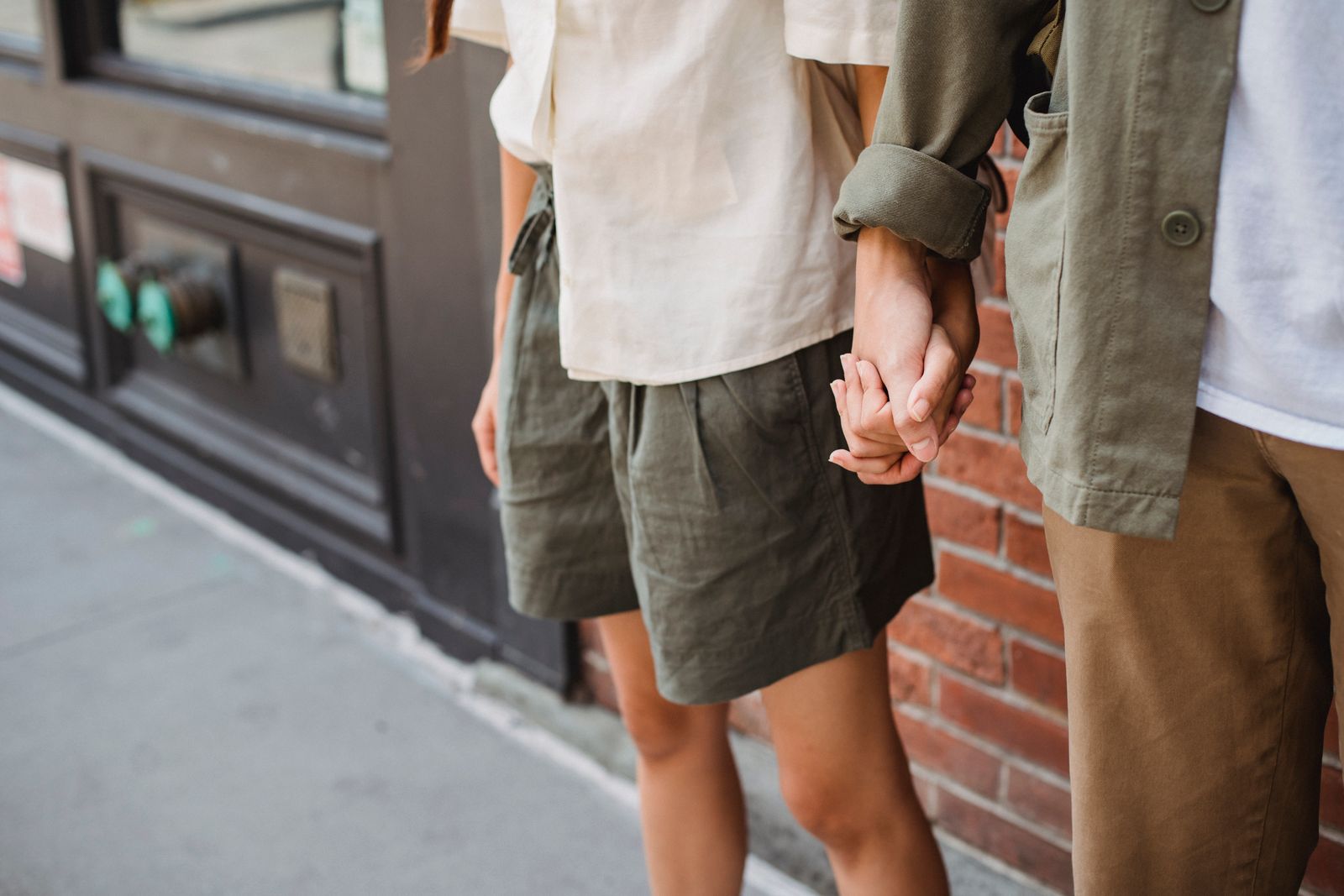
Photo by Samson Katt on Pexels
The hidden shaping panel is built into the front of the garment and works by distributing pressure across a wider area rather than gripping in one band. Because it is a broad panel rather than a narrow elastic strip, the tension per square inch is lower, and low tension is what elastic fiber tolerates best. Practically, that means the shaping layer usually keeps its behavior about as long as the main fabric does, provided it never sees high dryer heat.
Two care notes matter specifically here. First, the shaping layer sits inside, so washing inside out puts it on the outside of the bundle where it takes more abrasion — that trade is still worth making, because protecting the garment-dyed face matters more visually. Second, never iron directly over a shaping panel on a hot setting, since a concentrated heat load is the fastest way to kill elastic fiber. More on what that panel is doing and how it is constructed is covered in the piece on how the hidden shaping layer works.
Do stretch shorts wear out faster than non-stretch ones?
They change differently rather than faster. A rigid cotton twill short fails by thinning, fraying at the hem, and blowing out at stress seams, and it usually looks worn before it feels wrong. A stretch twill short tends to keep looking presentable while the fit drifts, so the failure shows up as feel before appearance. That is why the useful test is a fit check rather than a visual one: put them on cold in the morning after a rest day and note whether the waist sits where it used to.
For anyone who spends a lot of the day on their feet, the fabric's recovery is doing more work than the appearance suggests, which the walking-distance wear test gets at from the movement side.
FAQ
How long should a good pair of stretch twill shorts hold its fit? With cool washing, no heat drying, and at least one rest day between wears, the fit should stay close to new for years of seasonal use. With hot washing and hot drying, noticeable change can appear within a single heavy summer.
Is it bad to wear the same pair two days in a row? It is not harmful once in a while, but it is the habit that most reliably produces a loose waistband over time. If a second day is unavoidable, give the pair two days off afterward instead of one.
Should stretch shorts be folded or hung? Folded. Hanging them by the waistband keeps the elastic under low but constant tension, and folded storage also keeps garment-dyed fabric out of the light.
Does the fabric relax during the day on purpose? Yes, to a degree. Four-way stretch is meant to move with the body and warm slightly to the wearer, so a small amount of daily give is the fabric doing its job. The signal to watch is whether it returns overnight.
What to do next
Run one simple check this week. Wash a pair cool, dry it flat, leave it off the body for a full day, then put it on first thing in the morning. If the waist sits where it used to, the routine is the fix and the fabric is fine. If it does not, shift that pair to casual duty and start a two-pair rotation with cool washes and no dryer heat — that combination stops the drift for everything you own going forward.
Cover photo by Slava Kol on Pexels.