
Shorts for Days With Small Children: Crouching, Carrying, and Playground Floors
Shorts hold up to a day with small children when the waistband stays put through repeated squatting and the fabric recovers between movements. The four motions that decide it are the deep squat, the one-armed lift, the kneel, and sitting cross-legged on the floor, and most shorts fail at the first or the last. A stretch waistband with no rigid front and a fabric with give in both directions handles all four.
The four movements that decide whether shorts work
A day with a toddler is not a walk or a workout. It is dozens of short, extreme movements with a child's weight involved, repeated for hours.
- The deep squat. Getting to a child's eye level, tying a shoe, picking up a dropped cup. This is where a rigid front closure digs in and where a short rise slides down.
- The one-armed lift. Picking up a child from the ground onto a hip. This loads the waistband asymmetrically and pulls the whole garment sideways.
- The kneel. One knee down on pavement or carpet, repeated dozens of times. This is where fabric abrades at a single point.
- Sitting cross-legged on the floor. The longest-duration position of the day, and the one that puts the most sustained tension on the waist and seat at once.
Why the waistband is the whole story

Photo by Nicolas Postiglioni on Pexels
When a child is on your hip, one hand is unavailable and often both are. That means every adjustment you would normally make is unavailable too, so a waistband either stays put on its own or it does not.
A pull-on band with no button and no zipper helps for two specific reasons. First, there is no rigid segment at the front, so the deep squat does not press hardware into you and does not create a stiff edge for the band to fold over. Second, a continuous stretch band distributes the sideways pull of a one-armed lift across its whole surface instead of concentrating it at a closure. A high rise adds to this because it sits at the narrowest part of the torso, which is a stable placement rather than a sloped one.
Movement, failure, and what to look for
| Movement | How shorts typically fail | What to look for instead | |---|---|---| | Deep squat | Front hardware digs in, rise slides down | No button or zipper, high rise | | One-armed lift | Band pulls to one side and stays there | Continuous stretch band, no closure | | Kneel | Fabric abrades or bags at the knee area | Woven twill with recovery, not a loose weave | | Floor sitting | Waist relaxes and stays relaxed | Fabric with 4-way stretch that recovers | | Chasing a runner | Leg binds at the thigh | Tailored leg with give in both directions | | Carrying gear | Pockets empty as you bend | Deeper pockets, checked while seated |
What ends up in the pockets, and what that means
On a day with small children, pockets carry a phone, a set of keys, a pouch or a snack, sometimes a small toy, and frequently something a child has handed you and expects back. That load is heavier and more chaotic than the usual question of whether a phone fits.
The practical check is not standing up. Take a deep squat with everything in your pockets and see what tries to leave. Anything that clears the pocket opening while you are crouched will eventually end up on a playground floor. Patch pockets sit on the outside of the garment and stay accessible while seated, which is worth more on this kind of day than a slim internal pocket that becomes unreachable the moment you sit down. There is more on how these pockets are built in the pockets and performance breakdown.
Mess: what comes out and what stays
The realistic list of what will end up on your shorts is sunscreen, juice, mud, chalk, and something sticky you never identify. Two things make that manageable.
The first is color. Deeper garment-dyed colors hide food, dirt, and coffee, while lighter colors hide sunscreen marks and dried sweat better. Neither hides everything, so most people end up choosing based on which category of mark bothers them more.
The second is dye behavior. Garment-dyed twill lightens gradually with washing and wear, which means the shorts that see the most playground days will end up looking the most lived-in. Washing them inside out preserves the color considerably. It is also worth knowing that the dye can transfer onto lighter fabrics or surfaces, which matters if a child in a white shirt spends the day on your hip.
Car seats, strollers, and the other surfaces of the day
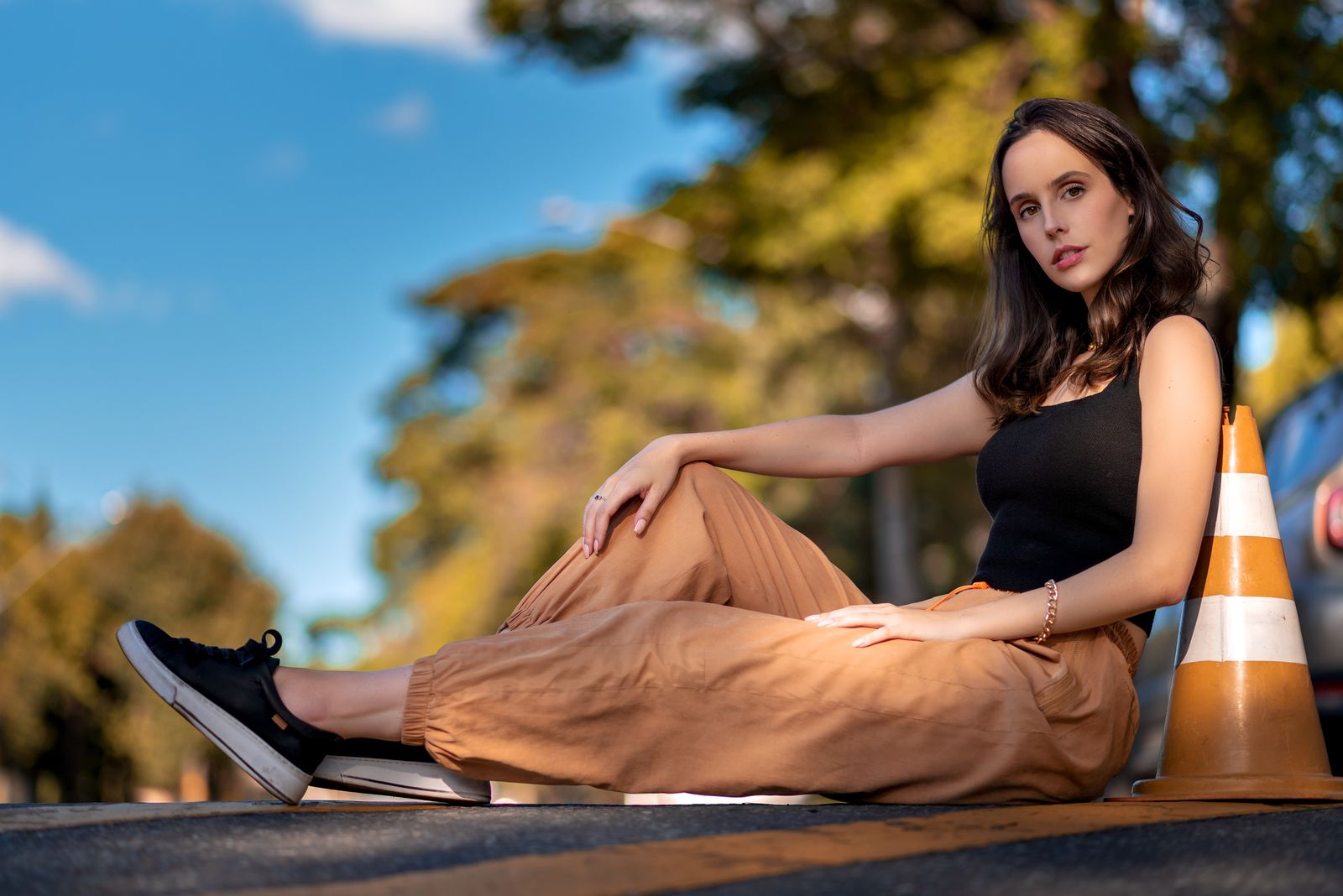
Photo by Malcoln Oliveira on Pexels
Buckling a child into a car seat is a sustained lean and twist held for thirty seconds at a time, several times a day, and it loads a waistband from an odd angle. Loading a stroller is a repeated bend at the hip with weight in front of the body. Neither is dramatic, and both are frequent enough that a band which needs resetting afterward becomes a genuine irritation by mid-afternoon.
The surfaces matter too. Car seats in summer are hot, playground benches are dirty, and floors are floors. A fabric dense enough to sit between skin and a warm vinyl seat is more comfortable than a very light one, which is the quiet advantage of a mid-weight woven over the thinnest options available.
Does length matter for crouching?
It matters less than the waistband, but it does matter. A longer inseam gives more coverage when you squat and kneel, which is the reason many people who spend the day at a child's height prefer the 6-inch over the 4-inch. A shorter inseam is cooler on a hot playground afternoon and moves more freely when you are running.
The useful approach is to pick by the day rather than by rule. Park mornings and floor play favor the longer length. Beach days and heat favor the shorter one. Neither is a requirement, and both work if the waist holds.
Frequently asked questions
Will the waistband stretch out from all the squatting? Temporarily, yes, and that is normal. Fabric with 4-way stretch relaxes under sustained tension and recovers when it is unloaded. The habit that matters is rotation: a pair worn on consecutive days never gets recovery time, which is what actually shortens a band's life.
Are shorts practical for a full day at a playground? For most people, yes, with one caveat. Slides, bark chips, and metal equipment abrade bare skin more than covered skin, so the tradeoff is coolness against contact. If your day involves going down slides, a longer inseam earns its keep.
How do playground stains come out without ruining the color? Treat spots promptly with cool water, wash inside out, and skip high heat entirely. Heat sets many stains and accelerates fade at the same time. Routine habits are covered in the everyday comfort guide.
Do these hold up to the amount of walking a toddler day involves? A day with a small child often adds up to more distance than a deliberate walk, in shorter bursts. The distance walking test covers how the fabric and waist behave over sustained mileage.
A practical next step
Try the loaded squat test at home before your next park day: fill your pockets the way you actually fill them, crouch fully, and see what stays in and where the waistband ends up. Thirty seconds of that tells you more about whether a pair works for this stage of life than any amount of standing in front of a mirror.
Cover photo by Margo Evardson on Pexels.