
The 8-Hour Wear Test: Pull-On vs. Zip-Fly Shorts Through Sitting, Driving, and Bending
Across a real eight-hour day, the comfort gap between pull-on twill shorts and zip-fly tailored shorts shows up in transitions rather than in standing still. Both feel fine upright in front of a mirror; the difference appears when the body folds — sitting down, reaching into a low cabinet, sliding into a car, climbing stairs. A pull-on waistband spreads that movement across a stretch panel, while a zip-fly concentrates it at a fixed closure, and that single structural fact explains most of what wearers report by late afternoon.
The structural difference in one paragraph
A zip-fly short is engineered around a fixed waist circumference. A button or hook sets the measurement, a zipper holds the front placket closed, and the fabric between them has to accommodate every change in posture without any give at the waist. A pull-on short in four-way stretch twill has no button and no zipper: the waistband itself is the adjustment mechanism, and it flexes continuously through the day instead of locking to one number. That is why one design has a right size and a wrong size with very little between them, while the other has a working range.
Neither approach is better in the abstract. A rigid closure creates a crisp, flat front that holds a pressed line, which is why tailored shorts still look sharp on a hanger. Stretch construction trades a little of that structural crispness for continuous accommodation. What follows is where each one earns or loses points during an ordinary day.
Hour by hour: where each design is noticed

Photo by Jeff Denlea on Pexels
| Situation | Zip-fly tailored short | Pull-on stretch twill short | |---|---|---| | Standing, first hour | Crisp and structured | Smooth, sits flat at the waist | | Two hours at a desk | Waistband presses at the front as the torso folds | Panel flexes with the fold | | Sliding into a car seat | Closure digs at the seated angle | No hardware to press | | Crouching to a low shelf | Rear rise pulls down; often needs a tug | Rise moves with the hip | | Stairs and brisk walking | Fine; thigh room is the limiting factor | Fine; four-way stretch follows the stride | | Sitting on the floor | Tightest moment of the day | Comfortable cross-legged | | After a full meal | Fixed circumference is unforgiving | Accommodates and returns | | Warm afternoon, mild swelling | Waist and thigh feel tight | Adjusts without a fit change | | Getting dressed and undressed | Two-step closure | One motion | | Airport security and restrooms | Hardware to manage | Nothing to undo |
The pattern is that the zip-fly is even with, or slightly ahead of, the pull-on when the body is upright and static, and behind it in every transition. Since a normal day contains dozens of transitions and only a handful of still moments, the cumulative experience favors the stretch design.
What "all-day comfort" actually means in a waistband
Comfort in a waistband comes down to pressure distribution. Pressure equals force divided by area, so a two-inch stretch panel carrying the same force as a narrow rigid band produces a fraction of the localized pressure. Hardware makes this worse in a specific way: a button and the top stop of a zipper are small, hard points that sit directly over the front of the abdomen at exactly the angle the body assumes when seated. That is the classic red mark at the end of a long day, and it is a geometry problem rather than a sizing one.
A high-waisted pull-on design changes the geometry twice. The waistband sits above the point where the torso creases when sitting, so the fold happens across fabric rather than at an edge, and there is no hardware at that crease. The hidden shaping layer inside the front adds a second wide, soft surface, which further spreads pressure instead of concentrating it. The result is not less support — it is the same support delivered over more area, which is what the body registers as comfortable. This is the same reasoning covered from the fit angle in the comparison of pull-on shorts against traditional zippered shorts.
Where zip-fly tailored shorts still win
An honest comparison has to name these.
- A pressed front line. A rigid placket and a flat waistband hold a crease better than a stretch panel does. For a formal dress code that expects visible tailoring, that matters.
- Predictable, unchanging waist measurement. Some wearers prefer knowing the waist will not move at all through the day.
- Belt compatibility. Belt loops with a rigid waistband are the environment a belt was designed for, and a belt can be part of the intended look.
- Structured pocket openings. Slash pockets on a stiffer fabric lie flatter than they do on softer, stretchier cloth.
- Traditional alteration options. A tailor can take a rigid waistband in or out; a stretch panel is far less adjustable.
The bend-and-reach test, done properly
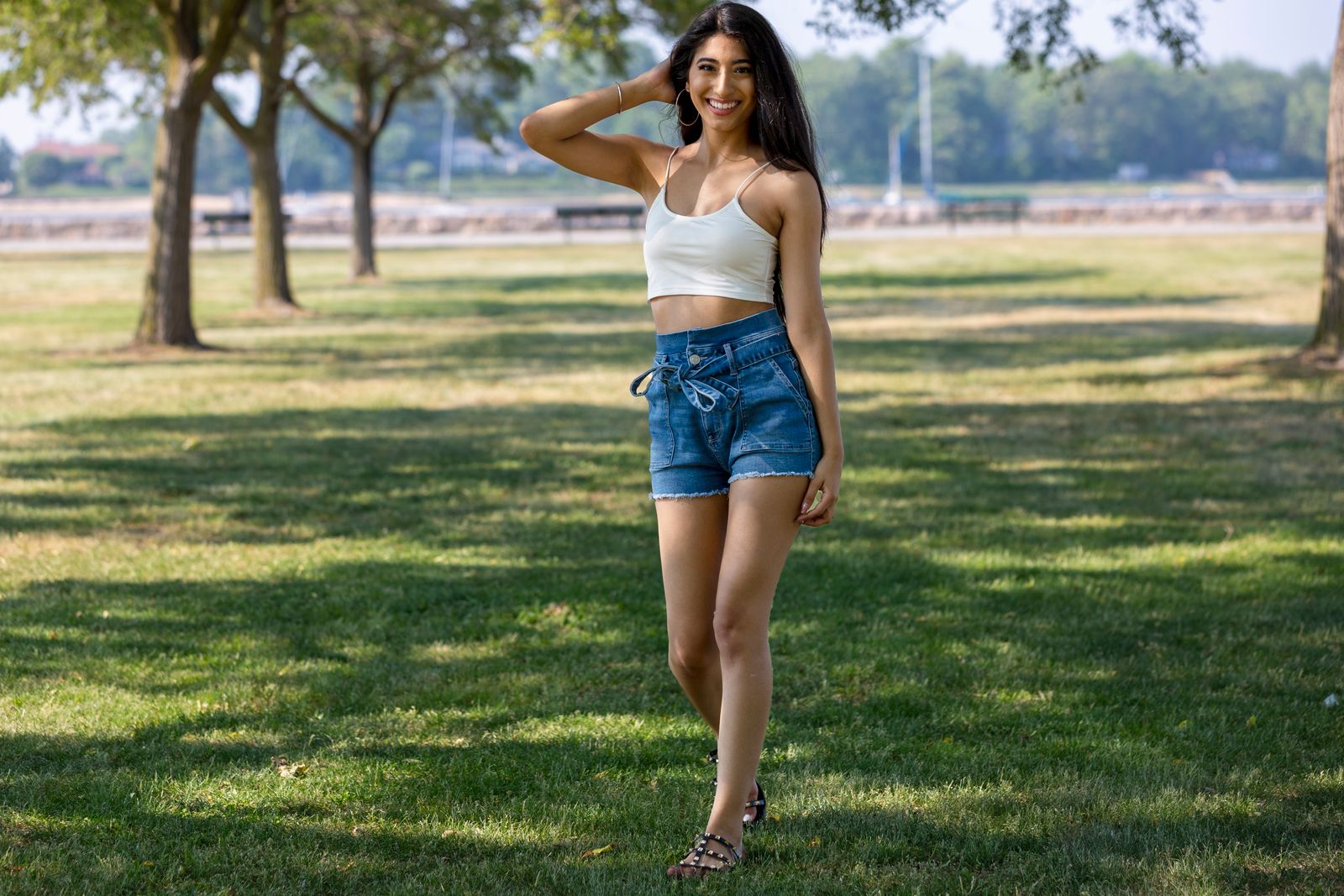
Photo by Jeff Denlea on Pexels
Before committing to either style, run a two-minute test in the fitting room or at home. Static mirror checks are how uncomfortable shorts get bought.
A pair that passes all seven will still be comfortable at the end of a long day. A pair that fails step three or five will not, regardless of how it looks standing still.
Fabric matters as much as the closure
Closure type gets the attention, but cloth does half the work. A garment-dyed stretch twill with four-way stretch moves in both directions, which means it accommodates a stride and a squat rather than only one plane of movement. Twill also has a diagonal weave that drapes softly and resists showing wrinkles, so a stretch pair still looks composed after a car trip — the part where a rigid cotton or linen short usually looks slept in.
Two inseam options matter here too. A 6-inch inseam gives more coverage when sitting on the floor or crouching, while a 4-inch inseam runs cooler and moves more freely in heat. Choosing based on the day's activities rather than a general preference is the more useful approach, and both lengths behave the same way at the waist. For the distance-walking version of this question, the walking wear test covers what happens over several miles.
FAQ
Do pull-on shorts feel less supportive than a zip-fly pair? They feel differently supportive. A wide stretch panel and an interior shaping layer hold the front smooth across a broad area rather than clamping at one line, so support is present but distributed. Most people describe it as secure rather than tight.
Is a pull-on waistband more likely to slide down while walking? Not when the size is right. A high-waisted pull-on band sits above the narrowest part of the torso, and the fabric's recovery keeps it there. Sliding is usually a sign the pair is a size too large rather than a limitation of the design.
Can a pull-on short work with a belt? It can if belt loops are present, but a belt is not doing any work on a stretch waistband and can create a gathered line under a fitted top. Leaving the waistband clean generally looks smoother.
Which is better for a long travel day? The pull-on design, by a wide margin. Sitting for hours, mild swelling at altitude, restrooms in a confined space, and security lines all favor a waistband with no hardware and a working range instead of a fixed measurement. Casual and workplace-adjacent versions of that trade-off are covered in the piece on twill shorts for relaxed work settings.
The practical next step
Decide by day, not by category. If most of the coming week involves sitting, driving, crouching, packing, and walking, a pull-on stretch twill pair will be the more comfortable choice at hour eight and will look composed the whole way. Keep one zip-fly pair for the settings that genuinely require visible tailoring, and run the seven-step bend-and-reach test on whatever pair arrives next before the tags come off.
Cover photo by Breno Cardoso on Pexels.