
How to Wash and Care for Garment-Dyed Stretch Twill Shorts
How to Wash and Care for Garment-Dyed Stretch Twill Shorts
Garment-dyed clothing offers a cozy, lived-in color tone that enhances with age. However, improper washing can lead to premature fading or color bleed. Follow this standard laundry procedure to keep your Women's Comfy Stretch Twill Shorts looking great for years. For additional maintenance and fit tips, consult [the main guide].
Step 1: Prep Your Shorts for the Wash
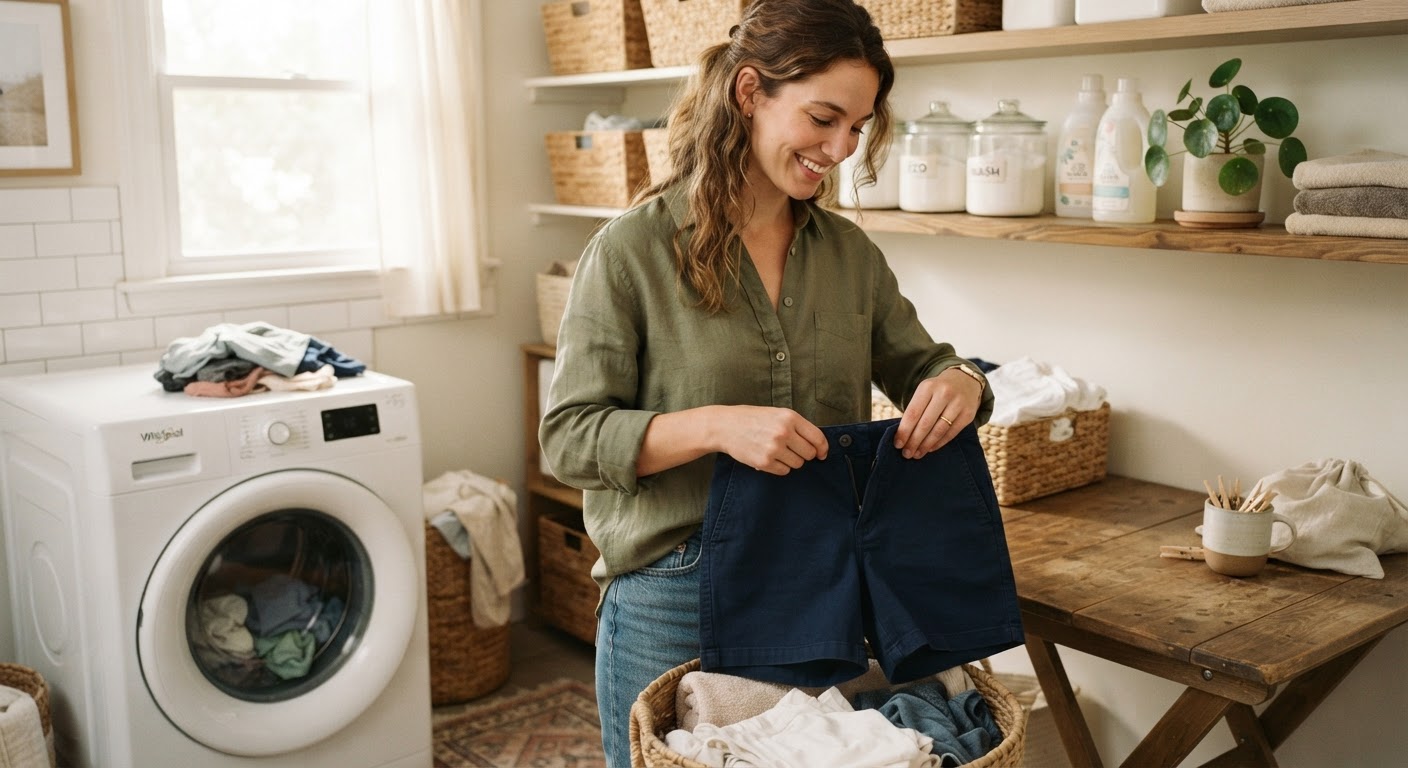
Turn your shorts inside out before placing them in the machine. This simple action minimizes surface friction during agitation, preserving the rich garment-dye surface and preventing rub-off onto other items. Turn them inside out. On a garment-dyed fabric this matters more than usual, because the colour sits closer to the surface than in a piece-dyed cloth and most visible fading is surface abrasion from rubbing against the drum and other clothes rather than dye washing out.
Fasten any closures and empty every pocket, checking the back ones as well. A pen is the usual disaster, and a tissue turns a whole load into a chore.
Sort by colour with more care than usual for the first several washes. Garment dyeing means the finished item was dyed after construction, and such items typically release some excess colour early in their life. Washing a new pair with white items is the classic way to discover this.
Deal with spots before washing rather than expecting the machine to lift them. Cold water and a little mild detergent on a soft cloth, working inward from the edge of the mark. Avoid scrubbing hard on a dyed twill, since friction lifts colour and leaves a lighter patch that is more noticeable than the original stain.
Step 2: Set Machine Temperature and Cycle
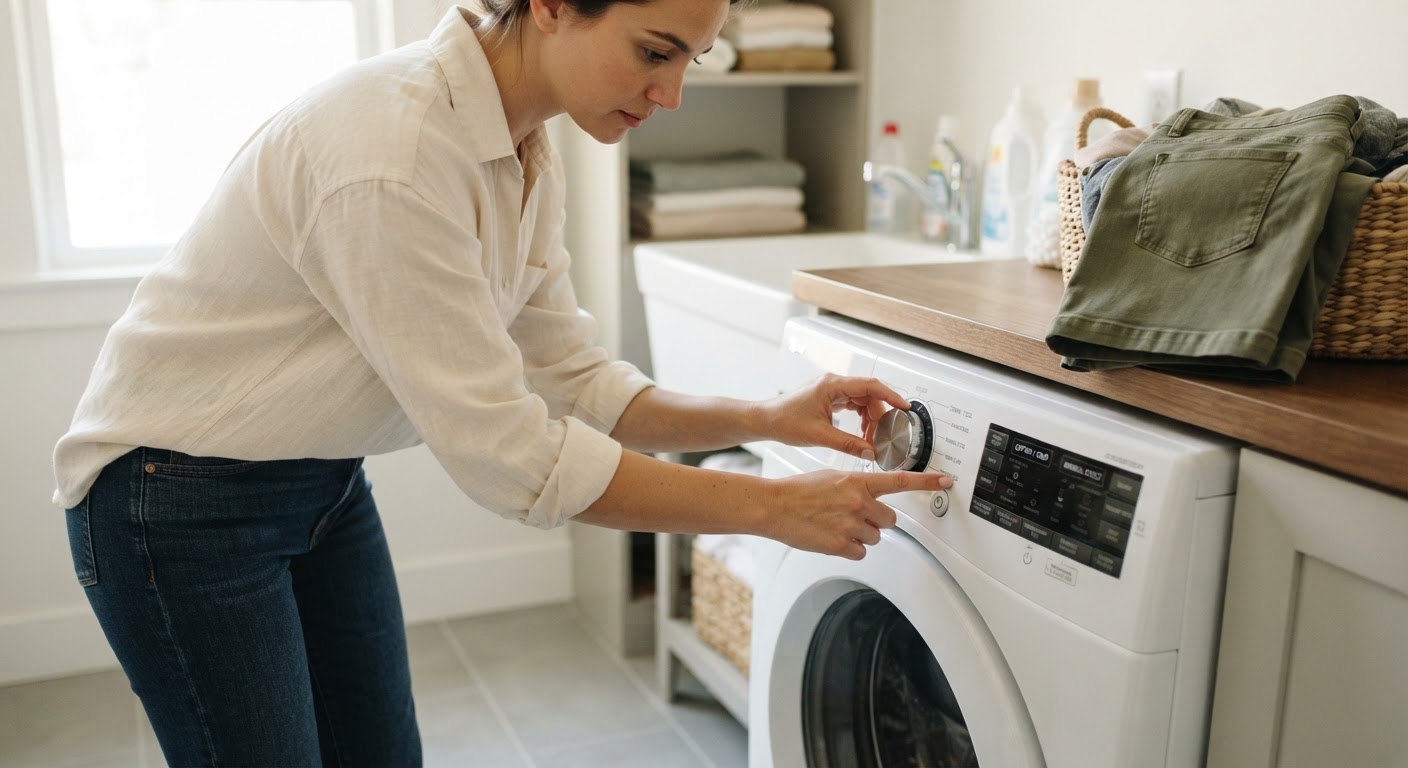
Select your washing machine settings carefully:
- Temperature: Always use WATER_TEMPERATURE.
- Cycle Speed: Choose a WASH_CYCLE_SPEED cycle.
Use a gentle or normal cycle rather than a heavy-duty one, and choose the lowest spin available. High spin speeds force fabric hard against the drum, and abrasion is what fades a garment-dyed surface.
Do not overfill the machine. A packed drum means more rubbing between items and less thorough rinsing, and both work against a dyed stretch fabric.
Washing them less often than instinct suggests also helps. Unless visibly soiled, shorts worn for a day can usually be aired and worn again, and every wash cycle costs a little colour and a little elasticity.
Step 3: Add the Right Detergent
Pour in a mild DETERGENT_TYPE free of harsh optical brighteners or bleaching agents. Avoid pouring concentrated liquid detergent directly onto dry twill fabric, as this can leave spotty discolorations on dyed cotton fibers. Use a mild liquid detergent, and use less than the packet suggests. Detergent residue trapped in fabric leaves a stiff feel and dulls colour over time, and most people use considerably more than a modern machine needs.
Avoid three things specifically. Bleach, obviously, including the oxygen-based versions found in many powders, which strip colour from dyed fabric quietly rather than dramatically. Optical brighteners, which are in most detergents marketed for whites and which alter how dyed fabric reads under light. And fabric softener, which coats fibres, reduces the recovery of elastane, and is the most common way people ruin stretch garments while believing they are looking after them.
A detergent formulated for colours is a reasonable choice, and for the first few washes of a garment-dyed piece, a colour-catcher sheet in the drum is cheap insurance against transfer onto anything else in the load.
Step 4: Dry and Store Properly
Line dry your shorts in a shaded spot away from direct sunlight to prevent UV fading. Once dry, store them in a closet maintained at STORAGE_HUMIDITY_PERCENT relative humidity to prevent fabric stiffness. Following these steps preserves the estimated [fabric tensile strength psi] cotton-blend matrix and keeps your shorts fitting like new.
Read the full guide: The Ultimate Guide to Wearing, Styling, and Caring for Stretch Twill Shorts
Air dry, and keep them out of direct sun. A tumble dryer is the fastest way to end the useful life of a stretch garment: the heat breaks down elastane, and once recovery is gone the shorts bag at the seat and waist permanently. Drying in strong sunlight causes its own problem, fading the exposed surface unevenly, so a shaded airy spot is better than a bright one.
Dry them inside out and reshape while damp, smoothing the waistband flat and straightening the leg openings. Fabric holds whatever shape it dries in, so two seconds of attention here saves ironing later.
Hang by the waistband on a clip hanger rather than folding over a rail, which leaves a crease line across the leg that is difficult to remove without heat you are otherwise avoiding.
If ironing is needed, use a low setting, iron inside out, and use a pressing cloth. Direct heat on a garment-dyed surface can leave a shine that does not come out.
Stored folded rather than hung is fine for shorts, provided they are fully dry. Anything put away slightly damp develops a musty smell, and on a dyed fabric that usually means another wash and a little more colour lost.