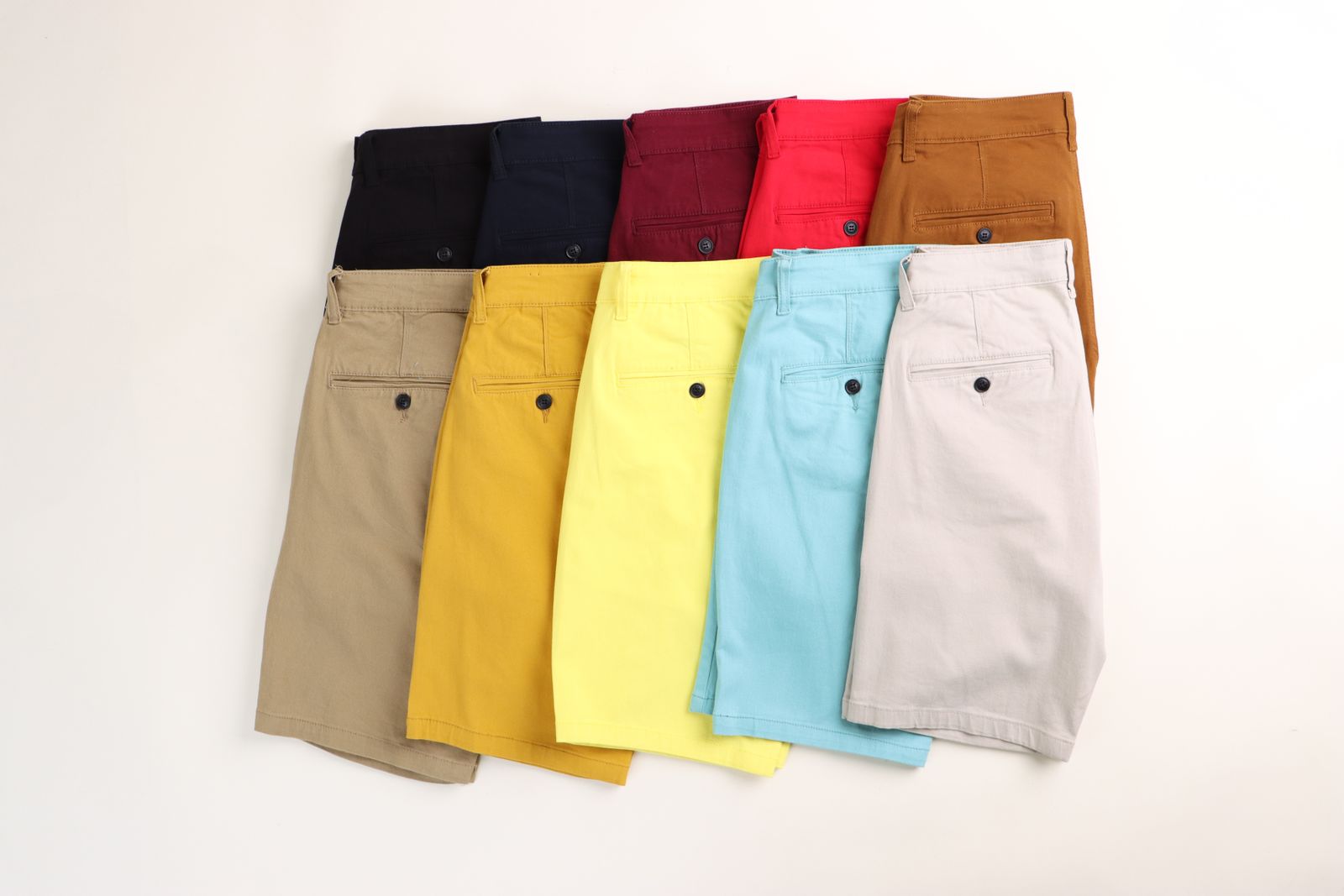
How Stretch Twill Shorts Change After Dozens of Washes
Stretch twill shorts do change over dozens of washes, but the change is mostly softening and a slow lightening of color rather than a real loss of fit. Garment-dyed fabric is built to fade into a worn-in look, and 4-way stretch relaxes across a day of wear and then recovers while the shorts rest. What feels like a stretched-out pair at wash thirty is usually about heat, storage, and rotation rather than fabric that has given up.
What changes first is the hand feel, not the size
Texture shifts before anything else. New twill carries a crispness from the finishing process, and that rinses out over the first handful of cycles, leaving a surface that is softer and more pliable against the skin. None of the measurements have moved at that point. The fabric is simply settling into the way it will behave for the rest of its life.
Most people read that softening as the shorts loosening up, because softer fabric follows the body more closely and presses less at the waist and thigh. It is a comfort change rather than a size change, and it is the most predictable thing that happens to stretch twill. If a pair feels noticeably better at wash ten than it did new, that is the fabric working as intended.
Why the waistband shows change before the leg panels
Photo by Godisable Jacob on Pexels
A pull-on short carries its entire fit at the waist, so that is where any real change appears first. The waistband is worked hardest: it stretches to go on, holds tension all day, and gets pulled again coming off. The leg panels flex when you walk and sit but never carry the same continuous load.
Elastic recovery is also the part of a garment most sensitive to heat. High dryer temperatures and hot water shorten the useful life of stretch fibers faster than the number of wash cycles alone. Two pairs washed the same number of times can sit differently at the waist if one has spent its life on high heat and the other has been dried flat or on low.
A realistic timeline by wash count
| Wash range | What most people notice | What it usually means | |---|---|---| | 1 to 5 | Crispness gone, fabric softer, color a shade lighter | Finishing has rinsed out and the true hand of the fabric shows | | 5 to 15 | Waist feels friendlier, shorts feel more forgiving through the day | Fabric and elastic have found their working tension | | 15 to 40 | Visible fade at seams, pocket edges, and the seat | Garment dye wearing the way it was designed to | | 40 and up | Waist may sit slightly lower, fade reads as character | Recovery is slower, so rotation and cool washing matter more |
The ranges are approximate because wear matters as much as washing. A pair worn for eight-hour days five times a week ages faster than a pair worn on weekends, even at the same wash count.
How to tell relaxed fabric from worn out fabric
Relaxed fabric and worn out fabric feel different once you know what to check:
- Relaxed: the waist gives easily when you put the shorts on but sits back where it should after a few minutes of movement.
- Relaxed: the fabric is softer and drapes closer, but the seams still lie flat and the panels hold their shape.
- Worn out: the waist stays wide after being stretched and never returns, even after a rest day.
- Worn out: the fabric looks thin or shiny in high-contact areas rather than evenly faded.
- Worn out: seams pucker or ripple where they used to lie flat, which points to fabric that has lost recovery unevenly.
The four habits that age stretch twill fastest
Does the stretch itself stop working?

Photo by Felipe Balduino on Pexels
Four-way stretch does not switch off, but its recovery gets slower with age. Stretch in a woven twill comes from a small proportion of elastic fiber distributed through the weave, and that fiber loses a little of its snap-back over years of heat and tension. The practical effect is that an older pair takes longer to return to shape after a long day of sitting, not that it stops stretching. Movement stays comfortable long after the crisp original fit has softened.
How fade and fit read together
Garment-dyed twill is dyed after the garment is sewn, which is why the color sits slightly differently around seams and pockets and why it lightens gradually with washing. That fade is a design outcome, not a fault. It also means a pair that has been washed many times looks older than it fits, and people often retire shorts on appearance while the fit is still sound.
If the fade is the part that bothers you, the fix is rotation and color grouping in the wash rather than replacement. If the fit is the part that bothers you, check the waist against the rest test above before deciding. For a broader look at how the fabric behaves from day one, the complete guide to stretch twill shorts covers construction and wear together, and the breakdown of the fabric technology explains what the stretch is actually doing.
Frequently asked questions
Do stretch twill shorts shrink? Any cotton-based woven can tighten slightly with heat, most noticeably after the first wash and dry. It usually relaxes back within a few minutes of wear. Washing cool and drying on low keeps that movement small.
Should you size down once a pair feels relaxed? Not on the basis of one long day. Rest the pair for two days and try it again. If it comes back, the fabric relaxed rather than stretched out, and a smaller size would fit tightly when new.
Is fading a defect? No. Garment-dyed twill is made to lighten as it is washed and worn, and color may transfer onto lighter fabrics or surfaces early in a pair's life. Washing inside out slows the fade considerably.
How many seasons should a pair last? That depends on wear frequency more than anything else. Two pairs rotated through a summer will each outlast a single pair worn continuously, because both get recovery time between wears. Habits documented in the everyday comfort routine extend that further.
A practical next step
Pick your oldest pair and run the rest test this week: two days out of rotation, then a normal day of wear. That one check tells you whether you are dealing with fabric that has softened, which is worth keeping, or fabric that has stopped recovering, which is worth replacing. Then adjust the two things that matter most going forward, which are drying temperature and having a second pair in rotation.
Cover photo by Luis Quintero on Pexels.