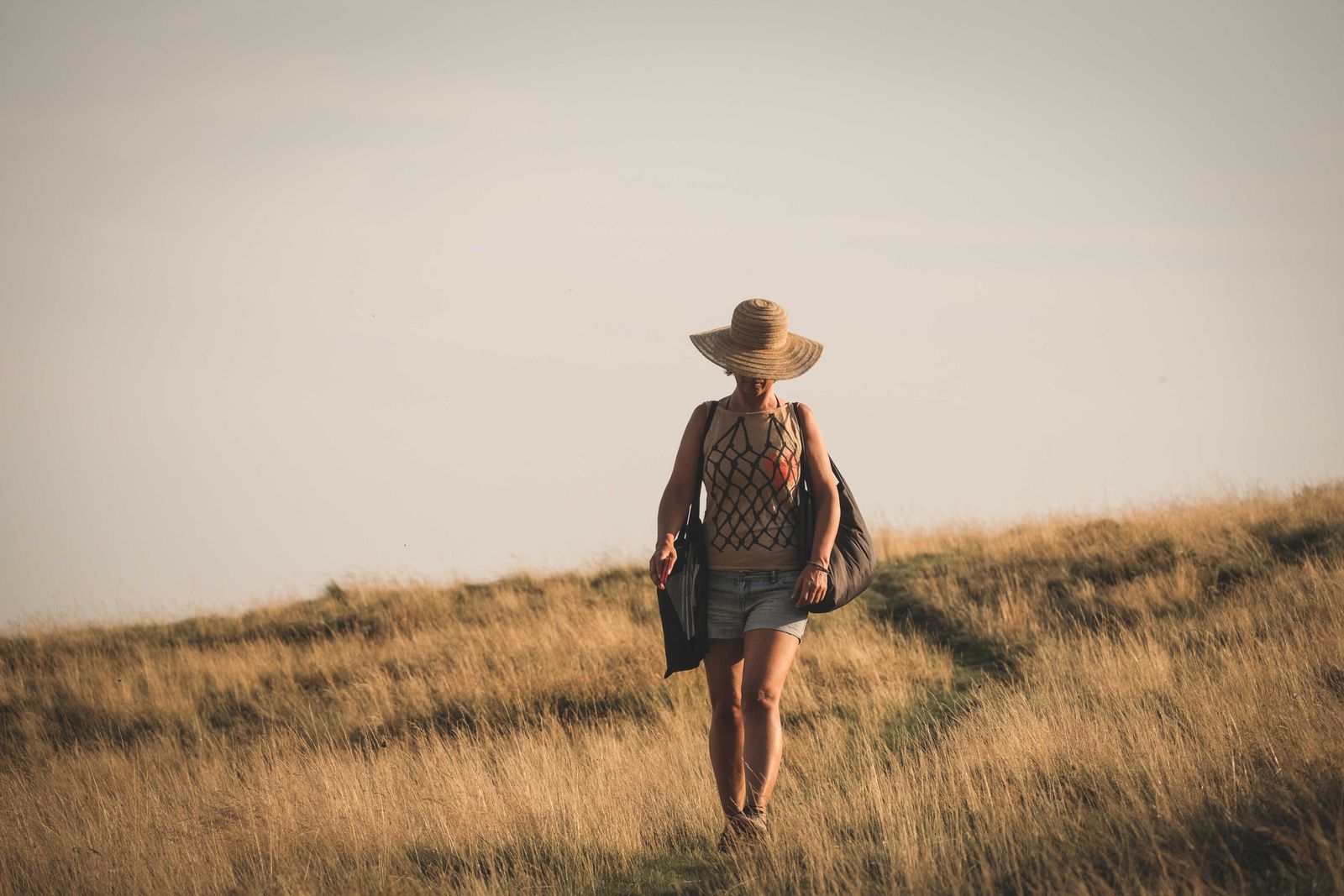
A Five-Day Capsule for a Hot-Climate Work Trip, Built Around Two Pairs of Shorts
A five-day hot-climate work trip fits in a carry-on if two pairs of shorts do the work of five bottoms. The method is to pack bottoms that repeat invisibly and tops that read as new each day, then wash one item in the sink midweek rather than packing for every scenario. That produces roughly fifteen usable outfits from nine garments.
Why the bottoms are the ones to repeat
Nobody notices a repeated pair of neutral shorts. Everybody notices a repeated printed top. That asymmetry is the entire logic of a capsule, and it means your packing budget should go into tops and almost nothing into bottoms.
Shorts are also the bottom that handles a hot climate with the fewest compromises, because the problem on these trips is rarely one temperature. It is the swing between a humid street and an aggressively cooled conference room several times a day. A bottom that stays comfortable at both ends plus one packable layer beats a heavier trouser that is wrong in both places.
The nine-piece list
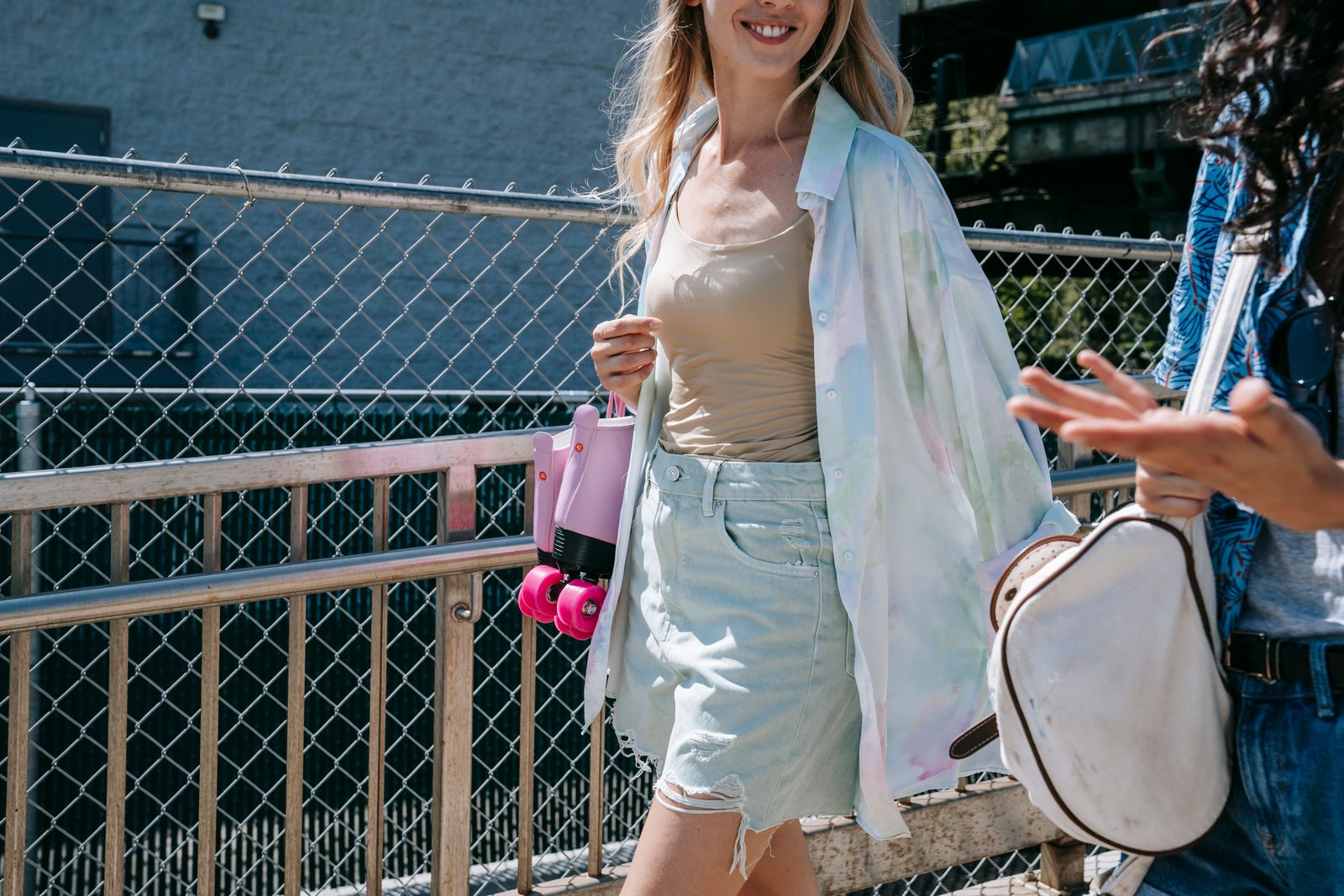
Photo by Katya Wolf on Pexels
- Two pairs of pull-on stretch twill shorts, one deeper color and one lighter. The deeper pair takes travel days and anything involving food.
- Four tops, ideally two quiet and two with some interest, all able to pair with either pair of shorts.
- One light layer that packs to nothing, for over-cooled rooms and evening flights.
- One pair of shoes you can walk in for hours, worn on the plane rather than packed.
- One pair of dressier shoes only if the trip genuinely has an evening that requires them.
How the five days actually lay out
| Day | Bottom | Top | Note | |---|---|---|---| | Travel day | Darker pair | Quiet top | Layer in the bag, not the suitcase | | Day one | Darker pair | Interest top | Meetings, layer at the desk | | Day two | Lighter pair | Quiet top | Sink-wash the day-one top tonight | | Day three | Lighter pair | Interest top | Darker pair rests and recovers | | Return day | Darker pair | Rewashed quiet top | Hides transit marks |
Each pair of shorts gets worn on non-consecutive days wherever possible. That is not only about freshness. Fabric with 4-way stretch recovers when it is unloaded, so a pair that rests a day fits better on the day it comes back into rotation.
The midweek sink wash, in five steps
If you do need to rinse the shorts themselves, wash them inside out. Garment-dyed twill lightens with washing and can transfer color onto lighter fabrics, and washing inside out preserves the color and keeps it away from the hotel's white towels.
What to leave out of the bag
The pieces that get packed and never worn are predictable. Leave behind the third pair of shoes, the "just in case" jacket for a climate that does not require one, the second pair of dressier shorts, and anything you have not worn in the last month at home. A trip is a bad place to test a garment for the first time.
Also leave out anything that needs pressing. Twill with stretch comes out of a packing cube usable, which is the practical reason it travels better than linen. For the broader argument on why this fabric handles travel well, the travel shorts guide covers the fabric behavior in detail.
Making shorts read as work-appropriate in a hot climate
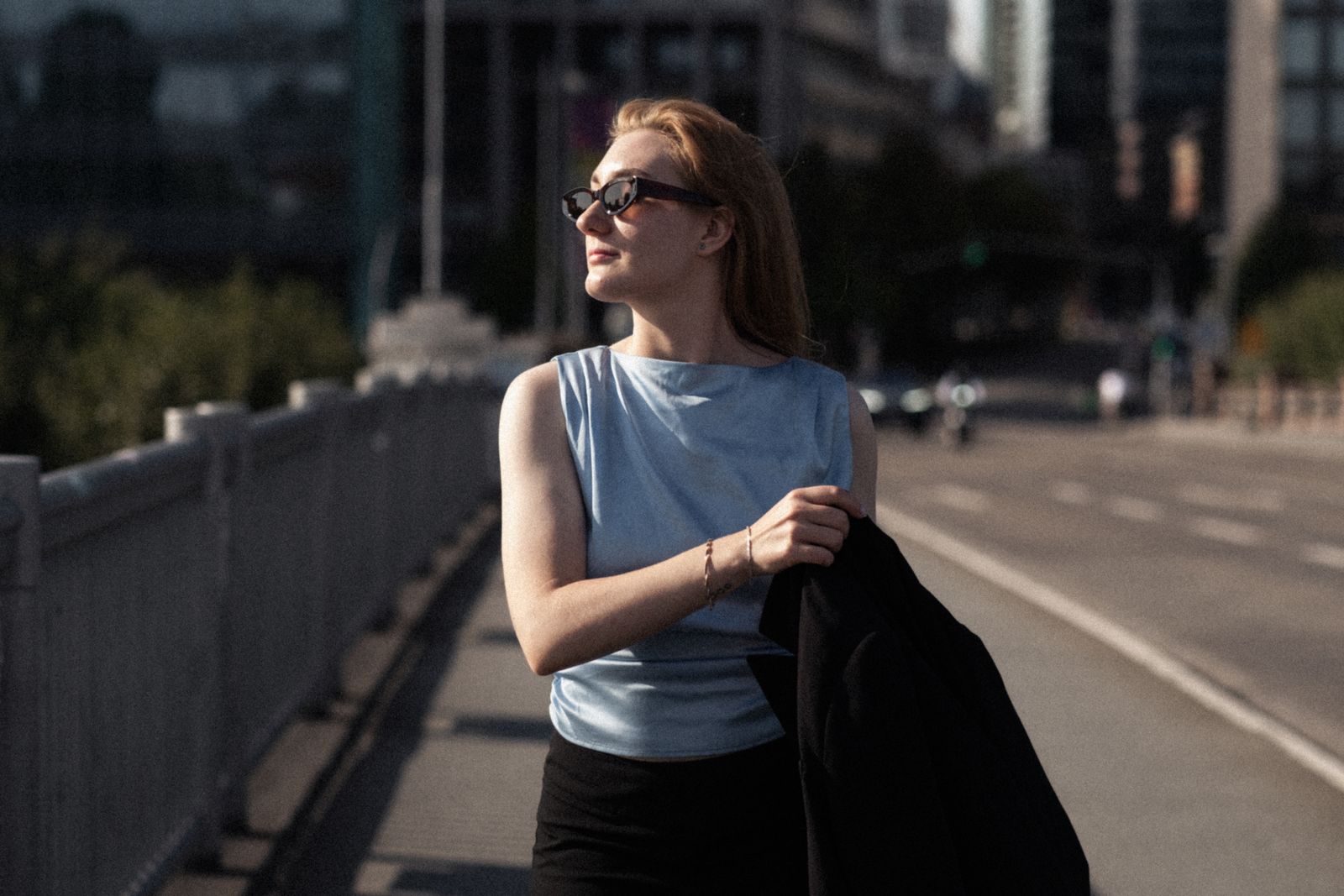
Photo by Alina Chernii on Pexels
Two variables carry most of the weight. The first is the top: something with structure at the shoulder or a crisp finish balances a relaxed bottom and reads as intentional. The second is the waistband line: a smooth front without hardware or gathering sits cleanly under a tucked top, and a tuck is the difference between a put-together look and a weekend one.
Beyond that, keep the leg tailored rather than loose and keep the length consistent between your two pairs so the silhouette does not change from day to day. The workplace-shorts breakdown goes further on where this style lands against a business-casual expectation, and the styling guide for high-waisted shorts has tuck-and-layer combinations that transfer straight into a capsule.
If the trip runs a day longer than planned
Extensions are common on work trips, and a nine-piece capsule absorbs one extra day without a shopping trip. The bottoms are already on a rotation that repeats invisibly, so the only genuine shortage is tops. One sink wash on the extension evening covers it.
The second thing an extra day exposes is shoes. A single pair of walking shoes worn five days straight is fine; worn seven days in humid heat it is less pleasant, which is the argument for at least alternating in the dressier pair on the days that allow it. Beyond a two-day extension, the better move is a real laundry service rather than stretching a sink routine, because heavier items never dry properly overnight in a hotel bathroom.
Frequently asked questions
Is two pairs of shorts really enough for five days? Yes, if they are neutral and if the tops carry the variation. The failure case is packing two pairs in colors that only work with two of your four tops, which quietly cuts your outfit count in half.
What if the dress code turns out to be stricter than expected? That is the argument for the one dressier shoe and the light layer. Shoes and a layer shift an outfit's register more than bottoms do, and they cost far less suitcase space than a second category of clothing.
Is it worth bringing both inseam lengths? Pick one length for the trip and pack two colors of it. Consistent length keeps the silhouette predictable across five days, which is what makes repeated bottoms invisible.
How does one outfit handle both the humidity and the cold rooms? Dress for the outdoors and carry the indoor solution. Shorts plus a packable layer handles a large temperature swing in seconds, whereas a heavier bottom is a fixed decision you cannot undo at the door.
A practical next step
Lay the nine pieces on the bed and build all five outfits before anything goes in the bag. If any top only works with one pair of shorts, swap it out. Ten minutes of that check is what turns nine garments into a week of outfits instead of a suitcase with three unworn items in it.
Cover photo by Francesco Ungaro on Pexels.