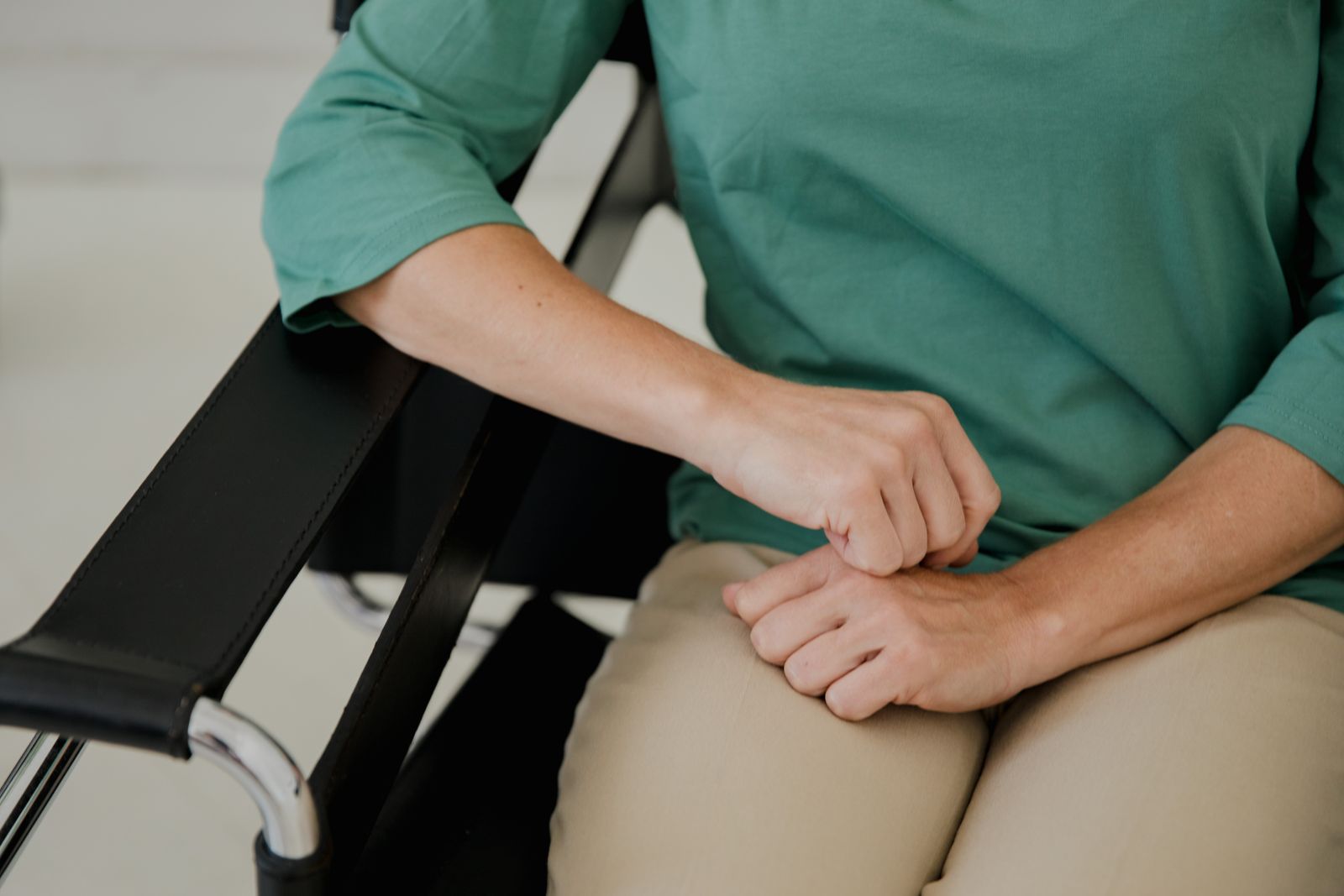
Bike Commuting in Shorts: What Makes a Pair Work in the Saddle
Shorts that work for bike commuting need three things: stretch that opens up at the hip through the pedal stroke, a waistband with no hardware digging in while leaning forward over the bars, and a leg that stays put instead of riding up. Pull-on stretch twill shorts handle all three, and unlike cycling-specific shorts they still look like ordinary clothes when the ride ends. For rides under about half an hour on an upright bike, they are often the most practical option available.
What a pedal stroke actually does to a pair of shorts
Cycling loads clothing differently from walking, and the difference explains why so many pairs feel fine on foot and wrong on a saddle.
The pedal stroke closes the hip angle much further than walking does. At the top of the stroke, the thigh comes up toward the torso, which stretches the fabric across the seat and the front of the hip. Fabric with no give either binds at that point or forces you to pedal from a compromised position.
An upright riding posture also tips the pelvis forward and puts the front of the waistband under compression. This is where hardware becomes obvious. A metal button and a zipper track sit in one fixed position and press inward every time the torso leans over the bars. Over a twenty-minute commute that pressure is constant, not intermittent.
Finally, the saddle grips the fabric. Every stroke drags the cloth slightly against the seat, which is what causes shorts to creep upward on the thigh and to wear at the seat over a season.
Why a pull-on waistband suits riding

Removing the button and zipper solves the single most common complaint about commuting in regular shorts.
A pull-on waistband is one continuous band of soft fabric. When the torso folds forward, the band flexes with the movement and spreads the pressure around the waist rather than concentrating it at one rigid point at the front. There is also nothing to catch or dig in when a backpack strap or a bag crosses the hip.
A high-waisted cut helps for a second, less obvious reason. Riding leans the upper body forward, which lifts the back of any low-rise garment away from the waist. A high rise stays in place through the whole ride, which means no adjusting at traffic lights.
The 4-way stretch is what makes the pedal stroke comfortable. Give along the leg handles the knee lift; give across the hip handles the seat. Both directions matter, and a fabric that only stretches one way will still bind. This is the same construction logic covered in the piece on why twill shorts hold up over long walking distances — the difference is that cycling asks for a wider hip range and less foot impact.
Commuting shorts compared
| Feature | Pull-on stretch twill shorts | Padded cycling shorts | Denim shorts | |---|---|---|---| | Hip range through the pedal stroke | Good; 4-way stretch | Excellent | Poor unless heavily blended | | Pressure at the front of the waist | Low; no button or zipper | None; elastic or bib | High; fixed hardware | | Looks normal at the destination | Yes | No | Yes | | Saddle comfort on a long ride | Fine for short trips | Best; padded insert | Poor; thick seams | | Chafing risk | Low with the longer inseam | Lowest | High at inner seams | | Pockets usable while riding | Patch pockets; secure items before setting off | Usually rear only | Yes, but tight when seated | | Getting changed at work | Nothing to change | Requires a full change | Nothing to change |
The honest summary: for a real ride — an hour or more, drop bars, any kind of training — padded cycling shorts exist for good reasons and nothing else substitutes. For a commute measured in minutes on an upright bike, the ability to arrive and simply carry on is worth more than a chamois.
Which inseam works better on a bike?
The 6-inch inseam is the stronger choice for riding. More thigh coverage keeps the fabric between skin and saddle, which reduces both rubbing and the amount the leg creeps upward through the stroke. It also means less bare-skin contact with a hot saddle in summer.
The 4-inch inseam runs cooler and offers the most unobstructed hip range, which suits short flat rides and hot days. The trade-off is more skin exposure on the saddle and a greater tendency for the hem to shift as the knee cycles.
If a single pair has to cover both commuting and everything else, the longer length is the more versatile pick for anyone who rides regularly.
Six practical habits for commuting in twill shorts
Photo by cottonbro studio on Pexels
Arriving looking presentable
Part of the appeal of commuting in regular shorts is skipping the change of clothes at the other end. Twill helps here in a way that few fabrics do. The diagonal weave resists creasing and visually breaks up the folds that do form, so a garment that has been sitting on a saddle for twenty minutes does not look like it. Garment-dyed twill also has a slightly uneven, worn-in surface that disguises the shine and the damp patches that show plainly on flat, pale fabric.
The remaining variable is the top, not the shorts. A high-waisted short works with a tucked or untucked shirt equally well, which gives some flexibility for whatever arrives at the destination in the least crumpled state. There are more ideas in this guide to styling high-waisted shorts for everyday outfits.
FAQ
Can stretch twill shorts replace padded cycling shorts? For short commutes on an upright bike with a reasonably comfortable saddle, many riders find they can. For rides over an hour, on a road bike, or on a narrow performance saddle, padding is doing real work and skipping it is uncomfortable.
Will the seat area wear out faster from riding? That area sees the most abrasion on any garment used for cycling. Twill is a dense, hard-wearing weave, and rotating two pairs is the single most effective way to spread that wear.
Do the shorts ride up while pedaling? Length is the main factor. A longer inseam has more contact with the saddle and stays put better; a shorter one moves more. Fabric with genuine four-way stretch also slides rather than gripping, which reduces creep.
Is a pull-on waistband secure enough for riding? A high-waisted pull-on band is more secure than most people expect, because it grips over a wide area rather than at a single closure. What loosens any waistband is heavy weight in one pocket, so keep the load balanced or off the garment entirely. Pocket capacity is covered in more detail in this look at how the pockets perform in daily use.
A practical next step
Sit on the bike in the shorts before committing to a commute in them. Put the pedals at the top of the stroke, lean forward as if reaching for the bars, and note whether anything presses at the front of the waist or pulls at the seat. That thirty-second check predicts a twenty-minute ride accurately, and it is far more useful than guessing from how the shorts feel while standing.
Cover photo by RDNE Stock project on Pexels.