Rise, Inseam, and Drape: FAQs on How Pull-On Twill Shorts Sit and Move
How a pair of shorts sits comes down to four measurable things: the rise, the width and construction of the waistband, the inseam length, and how the fabric drapes. Closure type barely affects the silhouette; those four do. Understanding what each one changes makes it possible to pick a pair on purpose instead of by trial and error, and to describe what is or is not working in a fitting room.
What does the rise actually change?
The rise is the distance from the crotch seam to the top of the waistband, and it determines where the shorts sit on the torso. A high rise places the waistband at the natural waist, which is the narrowest point of the torso for most people, so the fabric has a defined place to sit and stay. A low rise sits on the hip, where the circumference changes more with movement, which is why low-rise shorts need to be held up by friction or a belt.
Two practical consequences follow. First, a high-waisted pair generally stays put through walking, bending, and sitting without adjustment, because the waistband is resting in a natural groove rather than balancing on a curve. Second, the visual line changes: a high rise puts the horizontal break higher on the torso, which lengthens the visible run of leg below it. That is a geometry effect, not a claim about any body — the same pair of legs looks longer or shorter in a photograph purely based on where the horizontal line falls.
Why does waistband construction matter more than width?
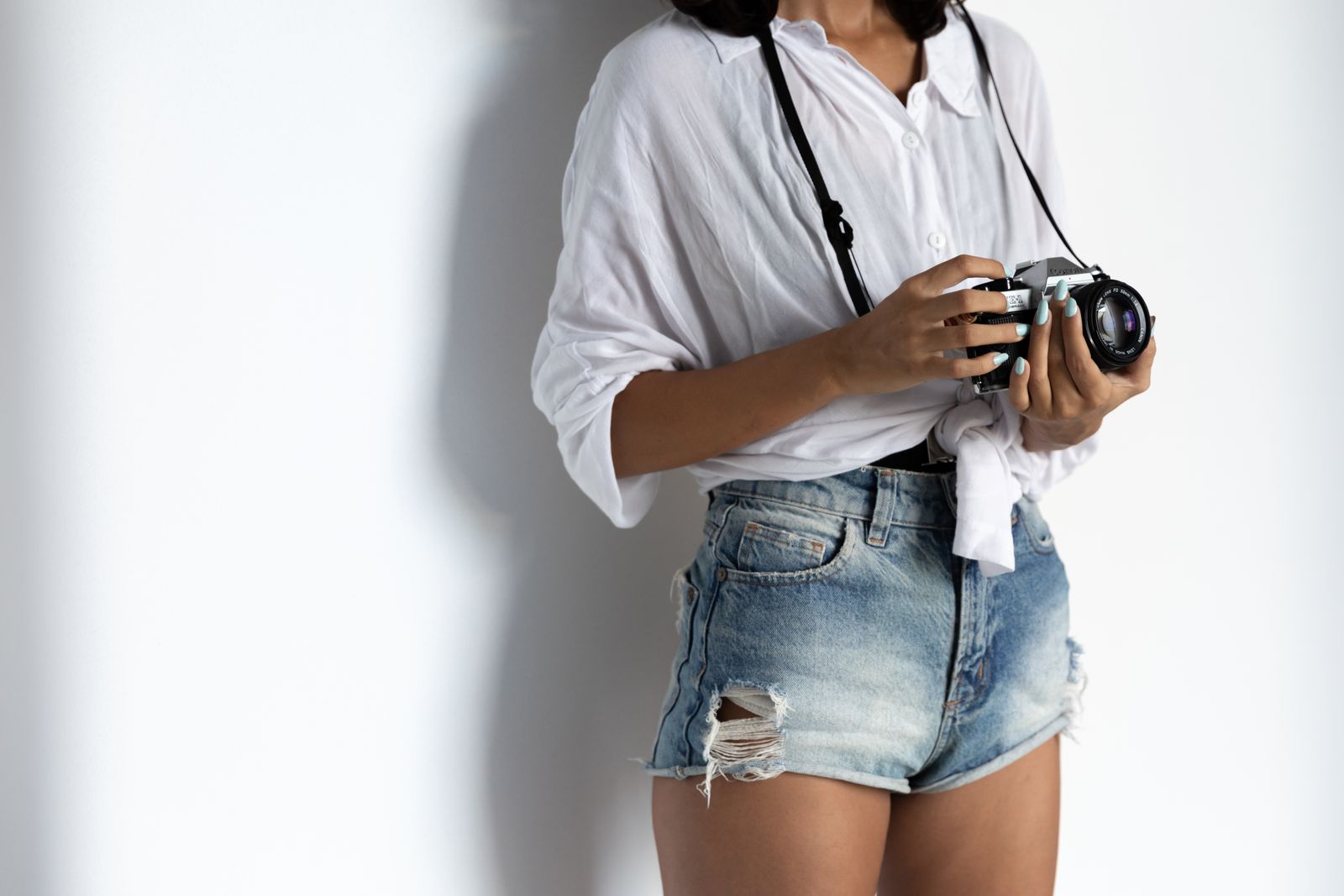
A wide waistband is not automatically better; a wide, smooth waistband is. The failure mode in elastic waistbands is gathering — fabric bunched onto a narrow band of elastic, producing visible ruching all the way around. Gathering adds bulk exactly where a smooth line matters, and no styling fixes it.
The alternative is a broad flat panel where the elastic and the outer fabric move together, with no bunching. That construction has two effects: the front stays smooth, and pressure is spread across a large area rather than pinching at one line. It is also why a well-built pull-on waistband can look cleaner in profile than a rigid band with a button, since there is no hardware creating a bump.
A hidden shaping layer inside the front adds a second smooth surface behind the outer fabric. What it does is hold the outer cloth flat so light falls evenly across it. What it is not doing is changing or correcting anything about a body — it is a construction detail that keeps a fabric surface smooth and a waistband comfortable across a long day. The mechanics of that layer are covered in more detail in the piece on how the hidden shaping construction works.
How much does inseam length change the silhouette?
More than any other single variable. The inseam sets where the hem lands, and the hem is the second horizontal line in the outfit. Two inseam options behave quite differently.
| Feature | 4-inch inseam | 6-inch inseam | |---|---|---| | Where the hem lands | Upper thigh | Mid thigh | | Reads as | Casual, warm-weather | Tailored, closer to dress shorts | | Airflow in heat | Highest | Good | | Coverage when crouching or sitting on the floor | Less | More | | Ride resistance while walking | Depends more on leg opening than on length | Generally very stable | | Easiest pairing | Relaxed tops, sneakers, sandals | Structured tops, loafers, flats | | Best for | Hot days, casual outings, movement-heavy days | Dinners, daytime events, longer wear |
Neither length is more correct. The useful way to choose is by what the day involves — heat and movement favor the shorter option, sitting and dressier settings favor the longer one. The length-specific fit details are laid out in the inseam fit guide.
What does four-way stretch add to how shorts sit?
It changes how the fabric responds to a moving body. Two-way stretch gives in one direction, usually across the body, so it accommodates width but resists length changes such as a long stride or a deep squat. Four-way stretch gives in both directions, so the fabric follows a movement rather than fighting it and then releasing suddenly.
In wear, that shows up as fewer adjustments. The hem does not creep up on a stride, the seat does not pull when crouching, and the waistband does not need a tug after standing up. It also affects appearance over the course of a day: fabric that stretches and recovers keeps its line, while fabric that stretches without recovering starts to bag at the seat and knee by the afternoon.
Garment dyeing contributes something separate. Dyeing after the garment is sewn produces a softer hand and a slightly broken-in surface from the start, which means the fabric drapes rather than standing away from the body. Drape is what makes a woven fabric look tailored instead of stiff.
How to read fit in a fitting room, in order
Photo by Breno Cardoso on Pexels
Steps five and six catch the problems that a static mirror check misses, and they are the reason a pair that looked fine in the store sometimes disappoints on a Saturday.
Which details make the biggest visual difference?
- Waistband height. The single largest factor in where the horizontal lines fall.
- Hem level. Two hems at slightly different heights read as sloppiness even when nothing else is wrong.
- Empty pockets. A loaded patch pocket breaks the flat front instantly.
- Fabric surface. Matte and smooth reads tailored; shiny or crumpled reads casual.
- Leg opening width relative to the thigh. Too narrow causes riding; too wide loses the line.
- Top hem placement. A top that ends exactly on the waistband doubles the edge; above or tucked is cleaner, as the casual styling guide for high-waisted shorts works through in outfit terms.
- Even color. Garment-dyed fabric should fade evenly; one lighter patch draws the eye more than the whole pair fading a shade.
FAQ
Are pull-on twill shorts as smooth in front as a zip-fly pair? Usually smoother, provided the waistband is a flat panel rather than gathered elastic. A zip-fly pair has a button and a zipper stop that create small bumps under a fitted top, while a flat panel has none.
Does a high-waisted pair work with any inseam length? Yes. Rise and inseam are independent measurements, so a high rise pairs with both a 4-inch and a 6-inch inseam. The rise governs where the waistband sits; the inseam governs where the hem lands.
Why do the shorts feel different at the end of the day? Four-way stretch warms and relaxes with the body, so a small amount of give through the day is expected behavior. Overnight rest lets the elastic fiber recover, which is why a pair often feels snug again the next morning.
Do patch pockets change how the back looks? They add a small amount of visual structure and a horizontal edge, which is why placement is a design decision rather than an afterthought. Keeping them empty preserves the flat surface, and pocket function on this style is covered in the piece on stretch shorts with real pockets.
The practical next step
Take two measurements before ordering: the natural waist at the narrowest point of the torso, and the point on the thigh where a hem should land. With those two numbers, rise and inseam stop being guesswork. Then run the eight-step fitting check on the pair that arrives, paying attention to the crouch and the twenty-step walk — those two steps predict how a pair will feel at hour eight far better than the mirror does.
Cover photo by Mikhail Nilov on Pexels.